

- 1. The Biggest Change Is No Longer “Tracking”
- 2. Many Enterprises Detect Problems Too Late
- 3. Prepare Compliance From the Planning Stage
- 4. Real-Time Visibility Is Becoming Mandatory
- 5. Always Prepare Backup Logistics Plans
- 6. Insights From THT Cargo Logistics
- Planning Machinery Imports or Factory Projects?
LOGISTICS TECHNOLOGY 2026: WHAT FDI ENTERPRISES REALLY NEED IS MORE THAN JUST CONTAINER TRACKING
In the context of global supply chains continuously being affected by Red Sea conflicts, port congestion, blank sailings, container equipment shortages, and changing customs regulations, traditional logistics operations are exposing businesses to increasing levels of risk.
Especially for projects involving:
- Production line imports
- Factory setup projects
- Factory relocation projects
- High-value industrial equipment imports
a delayed shipment is no longer simply a transportation issue. It can trigger a chain reaction across the entire operational process.
A delayed shipment may lead to:
- Equipment installation delays
- Factory operation postponements
- Additional warehousing and container storage costs
- Higher labor and onsite engineer expenses
- Production line stop risks
That is why logistics technology in 2026 is rapidly transforming how enterprises manage machinery imports and global supply chains.
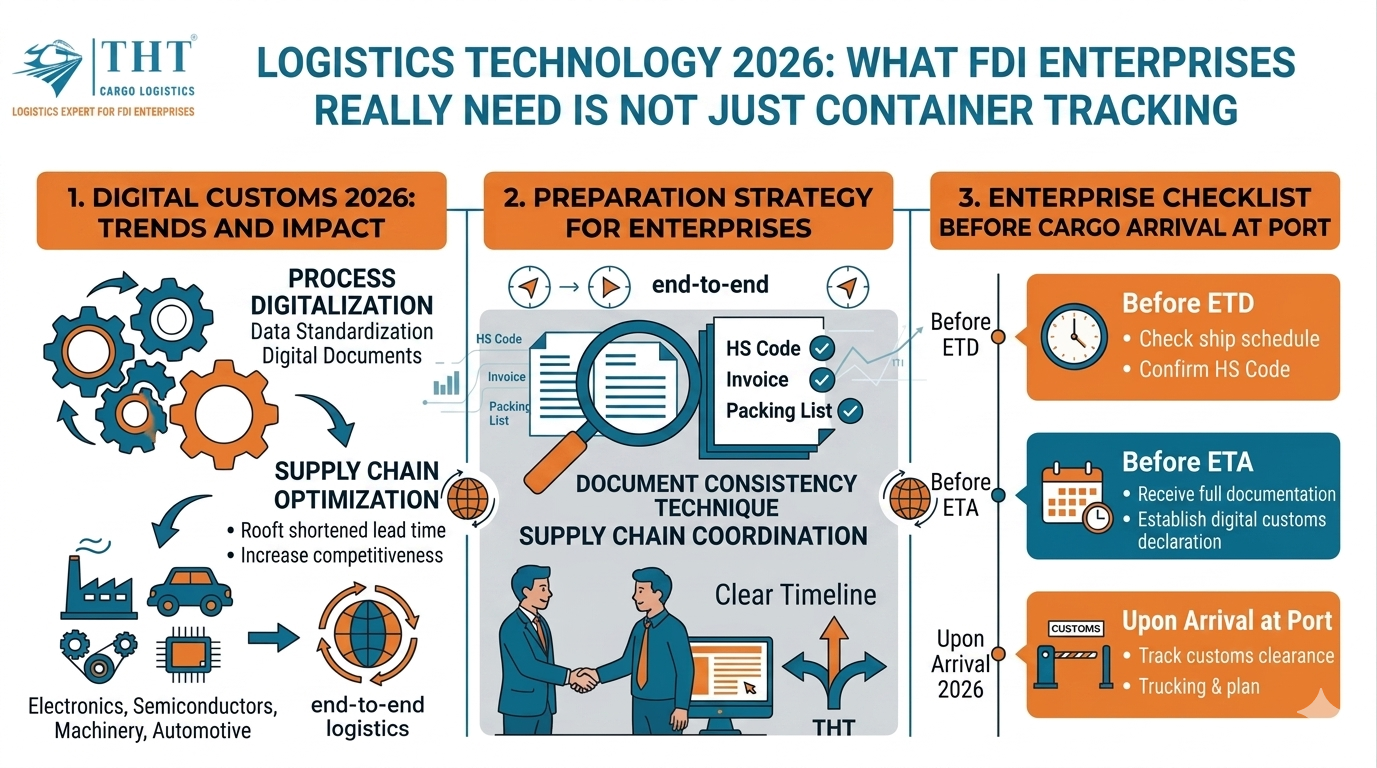
1. The Biggest Change Is No Longer “Tracking”
Many businesses still believe that logistics technology simply means container tracking or more accurate ETA updates.
However, the biggest transformation today is that enterprises are shifting from “shipment tracking” to “real-time logistics risk management.”
This is becoming the key difference in an increasingly volatile global supply chain environment.
Businesses today no longer only need to know:
- Where the container is
- What the ETA is
More importantly, they need the capability to:
- Detect disruptions early
- Forecast delay risks
- Proactively adjust operational timelines
- Minimize impacts on production planning
2. Many Enterprises Detect Problems Too Late
Today, many companies only realize logistics issues after operations have already been impacted.
Common situations include:
- Last-minute vessel schedule changes
- Container rollovers to later sailings
- Congestion at transshipment ports
- Shortages of chassis and port handling equipment
However, most businesses only recognize the seriousness of the issue when:
- The actual ETA becomes significantly delayed
- Installation schedules must be postponed
- Onsite engineers are left waiting for equipment
- Factories begin lacking materials for operations
At that stage, businesses are often forced into “firefighting mode,” leading to substantial additional costs such as:
- Demurrage and detention fees
- Warehouse storage costs
- Emergency transportation expenses
- Overtime labor costs
- Production disruptions
For FDI enterprises, the largest losses are often not transportation costs themselves, but rather the cascading impact on factory operations and project timelines.
3. Prepare Compliance From the Planning Stage
One of the most common mistakes businesses make is only reviewing documentation after cargo has already been loaded or is about to arrive at port.
In reality, compliance-related issues should be reviewed from the planning and sourcing stages.
Businesses should prepare and confirm early:
- HS codes
- Technical documents
- Applicable import regulations
- CO/CQ certificates
- Machine specifications
Early preparation significantly reduces risks such as:
- Incorrect customs declarations
- Missing documentation
- Customs clearance delays
- Additional container and warehouse storage costs
4. Real-Time Visibility Is Becoming Mandatory
For machinery import projects with strict installation and operational timelines, real-time ETA visibility is no longer a competitive advantage — it is gradually becoming a mandatory requirement.
When enterprises gain better supply chain visibility, departments such as:
- Purchasing
- Import-export
- Warehouse
- Production planning
- Onsite engineering
can coordinate more proactively during project execution.
This helps businesses:
- Reduce delay risks
- Limit emergency costs
- Minimize last-minute schedule changes
- Optimize production planning efficiency
5. Always Prepare Backup Logistics Plans
As global supply chains continue facing congestion, blank sailings, and geopolitical risks, businesses should avoid relying on a single fixed logistics scenario.
For critical shipments, companies should prepare:
- Buffer timelines
- Alternative transportation routes
- Backup trucking solutions
- Split shipment plans when necessary
This helps businesses:
- Reduce operational disruption risks
- Minimize impacts on installation schedules
- Avoid being caught unprepared during sudden disruptions
6. Insights From THT Cargo Logistics
The year 2026 marks a major transformation period for the logistics industry.
Technology today is no longer focused solely on container tracking or providing more accurate ETA updates. The more significant shift is that businesses are moving from passive operations to real-time logistics management.
As global supply chains continue facing volatility related to vessel schedules, congestion, geopolitical risks, compliance requirements, and lead times, companies with stronger supply chain visibility, faster disruption response capabilities, and better compliance management will gain major operational and production stability advantages.
At THT Cargo Logistics, we focus on supporting businesses through:
- Logistics risk management
- Operational timeline optimization
- Import-export compliance support
- Enhanced supply chain visibility
to help enterprises become more proactive in an increasingly complex global logistics environment.
Planning Machinery Imports or Factory Projects?
THT Cargo Logistics is ready to support your business with practical logistics solutions, compliance consulting, and supply chain visibility strategies to help optimize operations and reduce risks in today’s volatile global logistics environment.
Visits: 27