

- 1. Why Do Customs Clearance Delays Pose Severe Risks to Businesses?
- 2. Common Pitfalls Causing Customs Clearance Bottlenecks
- 3. Strategic Solutions to Optimize the Customs Clearance Process
- 4. The Role of Industrial Logistics in Sustaining Industrial Supply Chains
- 5. Conclusion
- Seeking to Optimize Customs Clearance Pathways for Your Manufacturing Facility?
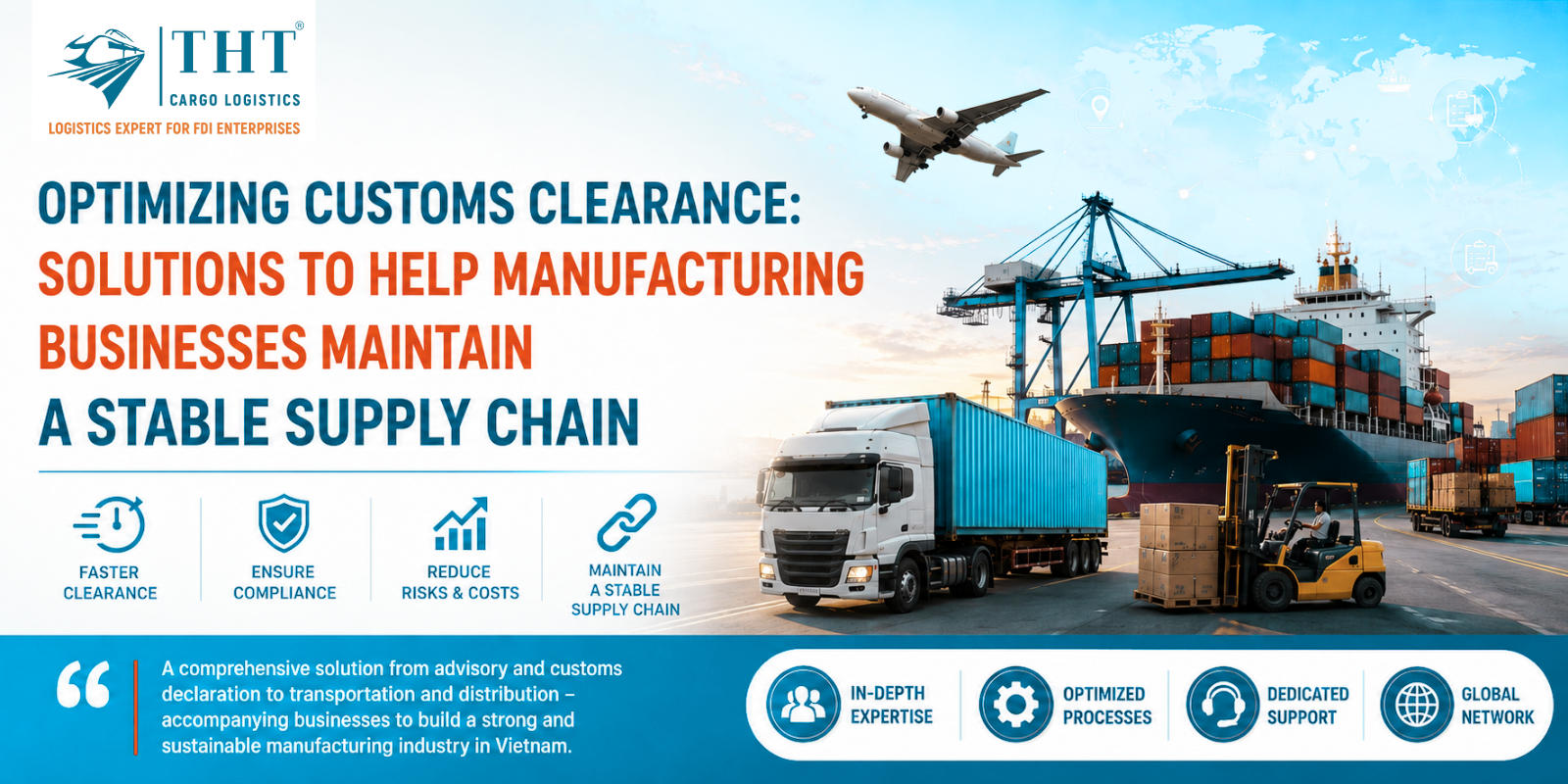
OPTIMIZING CARGO CUSTOMS CLEARANCE: SOLUTIONS FOR MANUFACTURING ENTERPRISES TO MAINTAIN STABLE SUPPLY CHAINS
For manufacturing enterprises—particularly FDI companies, businesses within industrial zones, processing or assembly plants, or those manufacturing for international orders—every shipment of raw materials, machinery, components, or finished products is tied directly to a specific operational schedule. Consequently, a single delay during the customs clearance phase can trigger a domino effect: unplanned expenses, production bottlenecks, delayed deliveries, and diminished credibility with partners.
Customs clearance is therefore far from a mere administrative formality. It is a critical component of industrial logistics management, enabling businesses to mitigate risks, optimize costs, and maintain an uninterrupted flow of goods.
1. Why Do Customs Clearance Delays Pose Severe Risks to Businesses?
In industrial logistics, timing is everything. A shipment held up at a port, border gate, or bonded warehouse impacts more than just transport planning; it directly compromises the entire downstream operational ecosystem.
| Risk Consequences | Detailed Corporate Impacts |
|---|---|
| Unplanned Cost Surges | When goods are not released on schedule, businesses face heavy incidental expenses such as container demurrage/detention (DEM/DET), port storage, warehousing fees, transport rescheduling penalties, or specialized storage costs.
For temperature-sensitive cargo, perishables, chemicals, specialized machinery, or components required for continuous manufacturing lines, prolonged wait times compound these financial penalties. In severe cases, companies risk degradation of material quality, requiring re-processing, re-testing, or rendering the shipment unusable for its original intent. |
| Disruption of Manufacturing & Delivery Schedules | Many modern factories operate under lean inventory models, manufacturing strictly against specific orders or aggressive delivery windows. Delayed raw materials force manufacturing lines to adjust schedules, halt operations, or incur expensive overtime labor costs to recover lost progress.
On the export side, delayed clearance of finished goods leads to late deliveries relative to contractual commitments, potentially breaching trade agreements, missing vessel bookings, disrupting client distribution schedules, and damaging standing with international buyers. |
| Damage to Reputation & Competitiveness | In the international arena, reliability and punctuality serve as core competitive advantages. Clients evaluate businesses not merely by product quality, but by their supply chain resilience and ability to deliver on schedule.
Repeated customs delays erode partner confidence, making it difficult to secure new orders or forcing businesses to accept less favorable commercial terms during contract renegotiations. |
2. Common Pitfalls Causing Customs Clearance Bottlenecks
To proactively mitigate risks, enterprises must treat customs clearance as a process to be standardized well in advance, rather than a hurdle to address only when cargo arrives at the port or border. In practice, most delays stem from entirely preventable issues:
1. Discrepancies or Inconsistencies in Shipping Documentation: Import-export documentation forms the legal basis upon which customs officials inspect, verify, and approve shipments. Even a minor discrepancy between the commercial invoice, packing list, bill of lading, customs declaration, or certificate of origin can halt the process, triggering requests for formal explanations, amendments, or supplementary filings. Common errors include mismatched descriptions, incorrect quantities or weights, inconsistent shipper/consignee data, misclassified HS codes, missing mandatory papers, or using obsolete form templates.
2. Complications with Specialized Inspections: Regulated commodity groups—such as foodstuffs, pharmaceuticals, cosmetics, chemicals, machinery, electrical equipment, high-tech goods, or products subject to quality standards—must clear specialized ministerial inspections before final release. If an enterprise fails to prepare dossiers early, misinterprets inspection criteria, registers via the wrong workflows, or fails to account for sampling and lab turnaround times, the cargo will sit in storage far longer than anticipated.
3. Inaccurate HS Code Classification: The HS code dictates the applicable trade policy, duty rates, import criteria, and specialized regulatory oversight. Selecting an incorrect HS code leads to declaration rejections, retroactive tax assessments, administrative fines, or lengthy physical inspections. For complex industrial commodities—such as heavy machinery, components, complete knock-down (CKD) sets, multi-composition materials, or multi-component goods—meticulous HS classification must be finalized well ahead of actual import or export phases.
4. Failure to Track Evolving Customs & Trade Policies: Regulatory frameworks governing duty structures, commodity policies, specialized inspections, rules of origin, and international trade change continuously. If a business fails to monitor these updates, its documentation may apply obsolete rules, overlook newly required permits, or miss out on preferential tariff treatments. This risk is particularly high for enterprises managing extensive product catalogs, operating across diverse international markets, or frequently updating their raw material, component, or equipment portfolios.
3. Strategic Solutions to Optimize the Customs Clearance Process
To eliminate compliance risks, businesses must shift from reactive problem-solving to proactive customs management. An effective clearance strategy rests on three pillars: precise preparation, accurate declaration, and agile coordination.
| No. | Strategic Solution | Practical Implementation Framework |
|---|---|---|
| 1 | Standardize Documentation Early | Develop structured documentation checklists tailored to specific product categories, target markets, and shipping modes. Crucial documents—such as Commercial Invoices, Packing Lists, Bills of Lading/Air Waybills, Certificates of Origin, commercial contracts, permits, and specialized inspection results—must be thoroughly audited before transmitting data to the customs portal. Cross-checking data eliminates inconsistencies and cuts down on post-arrival corrections. |
| 2 | Pre-determine HS Codes & Commodity Policies | Instead of evaluating codes on a shipment-by-shipment basis, build a centralized internal part-number database containing product descriptions, material compositions, functions, technical specifications, reference HS codes, and applicable compliance rules. For complex industrial machinery, production setups, or borderline items, consult logistics experts, customs brokers, or authorities to eliminate classification risks. |
| 3 | Proactively Monitor Regulatory Shifts | The import-export department must establish a routine to monitor updates concerning tariff lines, specialized inspection criteria, import licensing, rules of origin, FTA preference rules, and destination market mandates. Tracking these developments protects the business from compliance penalties and optimizes landed costs by leveraging legitimate tariff advantages. |
| 4 | Partner with Industrial Logistics Specialists | For manufacturing companies, selecting a logistics provider with verified expertise in industrial operations, international freight, and local customs procedures dramatically alleviates operational burdens. A qualified partner does more than input data; they provide downstream support from policy analysis, document auditing, HS matching, and C/O procurement through to clearance tracking, transport coordination, and on-site port troubleshooting. |
4. The Role of Industrial Logistics in Sustaining Industrial Supply Chains
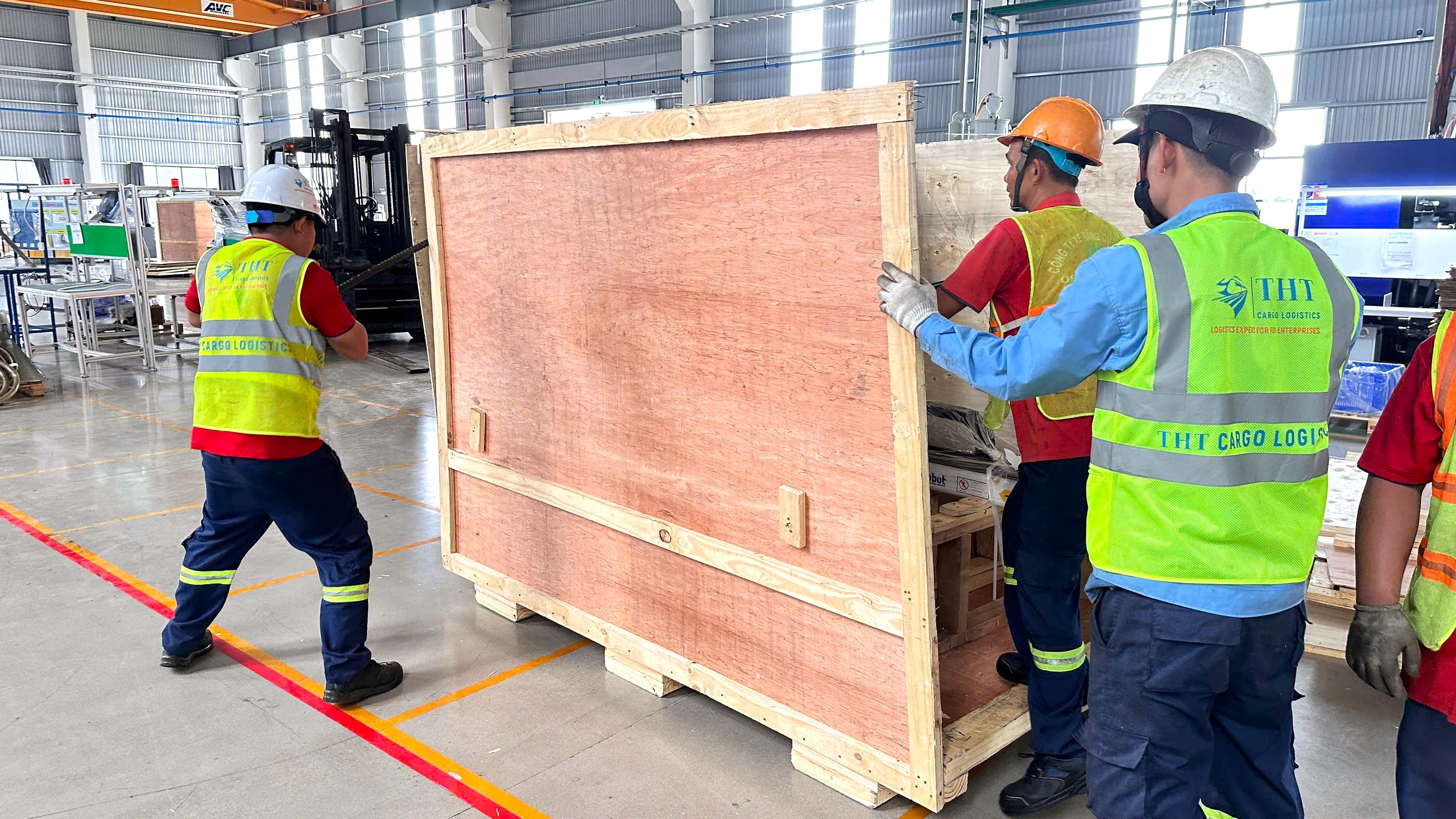
In modern manufacturing, logistics goes far beyond moving freight from point A to point B. It functions as the critical link connecting suppliers, manufacturing plants, seaports, airports, border crossings, warehouses, customs authorities, and the end customer.
A synchronized, highly optimized logistics architecture enables manufacturing operations to:
| ✔ | Accelerate customs clearance turnarounds and streamline delivery timelines. |
| ✔ | Maintain strict cost control, eliminating unnecessary demurrage, detention, and port storage outlays. |
| ✔ | Minimize human and administrative errors across documentation and declaration portals. |
| ✔ | Preserve constant factory run-times, preventing assembly line or production halts. |
| ✔ | Enhance capacity to fulfill international orders, securing long-term partner trust. |
For any manufacturing enterprise, this operational precision forms the baseline required to construct a resilient, agile supply chain capable of absorbing global economic shocks.
5. Conclusion
Optimizing customs procedures serves as a vital safeguard protecting supply chains from costly disruptions. By conducting advance legal reviews, standardizing documentation workflows, and engaging dedicated industrial logistics professionals, enterprises can successfully transform customs compliance from a traditional bottleneck into a lasting strategic advantage.
Seeking to Optimize Customs Clearance Pathways for Your Manufacturing Facility?
THT Cargo Logistics delivers end-to-end operational support, including regulatory policy evaluation, professional document audits, precise HS code matching, direct customs brokerage representation, and multi-modal transport coordination—insulating your industrial supply chain from risk.
Visits: 30