

- PRODUCTS REQUIRING EXPORT LICENSES
PRODUCTS REQUIRING EXPORT LICENSES
A Practical Solution to Avoid Customs Delays and Compliance Risks
Exporting goods is not simply a matter of booking cargo space and filing customs declarations. For many regulated products, businesses are required to obtain export licenses or complete specialized inspections before the shipment can be cleared for export. If these requirements are overlooked or addressed too late, the consequences can be significant: cargo detention, unexpected costs, and serious disruptions to customers’ supply chains.
WHY ARE EXPORT LICENSES SO CRITICAL?
In practice, most shipments held at border gates are not delayed because of transportation issues, but rather due to non-compliance with regulatory requirements—an area that many businesses still underestimate.
Not all products can be freely exported. Certain goods fall under specialized management, technology control, natural resource protection policies, or international commitments. These products require appropriate licenses before customs declarations can be submitted.
COMMON PRODUCT GROUPS REQUIRING EXPORT LICENSES
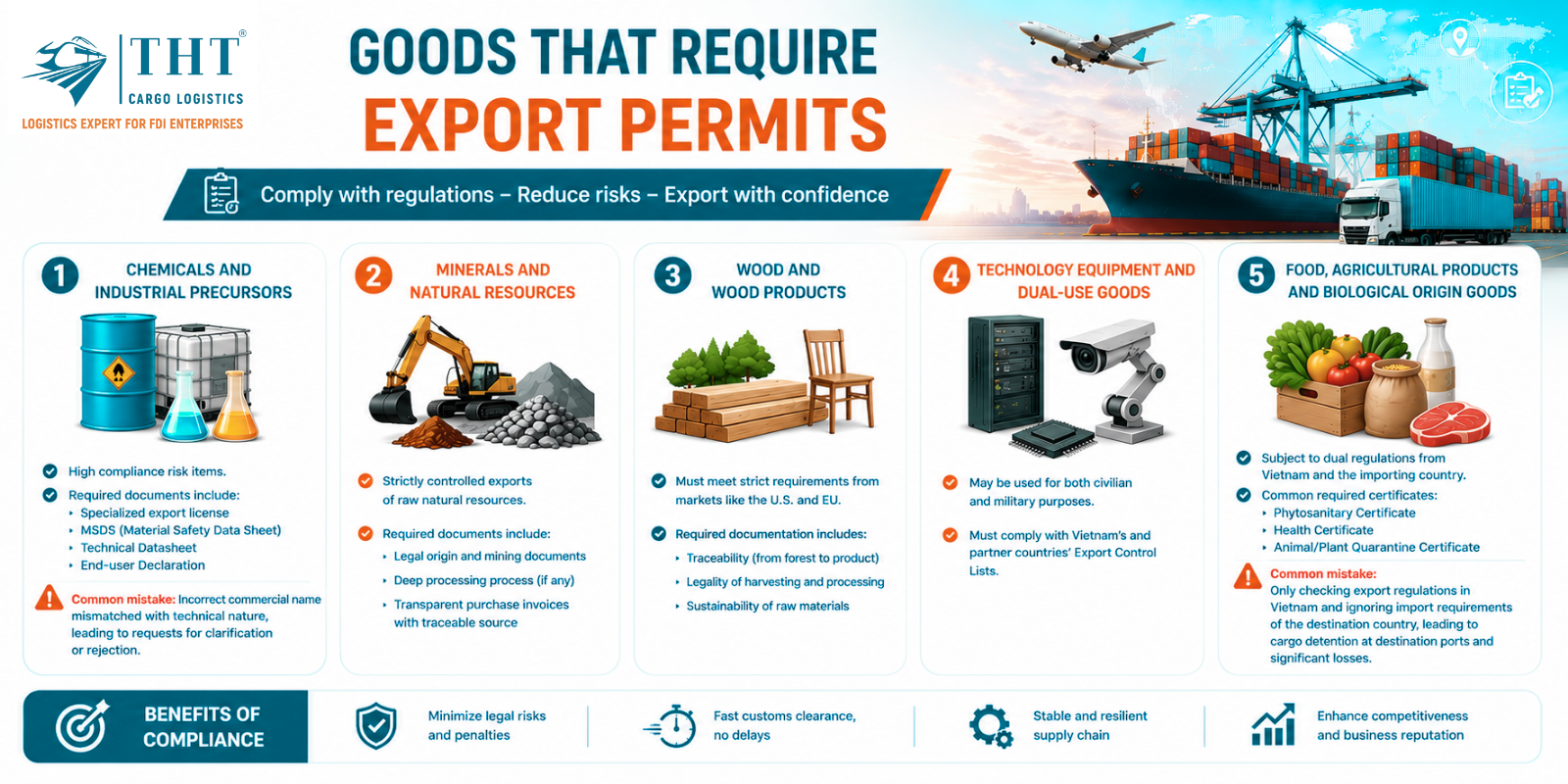
1. Chemicals and Industrial Precursors
This product group carries one of the highest compliance risks. Chemicals listed under the control of the Ministry of Industry and Trade or international conventions often require a comprehensive documentation package, including:
-
- Specialized export license
- Material Safety Data Sheet (MSDS)
- Technical Datasheet
- End-user Declaration
Using a commercial product name that does not accurately reflect the technical characteristics of the chemical, resulting in requests for clarification or rejection of the application.
2. Minerals and Natural Resource Materials
The export of raw natural resources such as sand, stone, ore, and minerals that have not undergone deep processing is strictly controlled to protect domestic resources. Businesses must demonstrate legal compliance through:
- Proof of origin and lawful extraction documents
- Deep-processing records (if applicable)
- Transparent purchase invoices with traceable sources
3. Timber and Wood Products
Demanding markets such as the United States and the European Union evaluate not only customs compliance but also the integrity of the entire timber supply chain. Businesses should prepare documentation demonstrating:
- Traceability from forest source to finished product
- Legality of harvesting and processing activities
- Sustainability of raw material sources
4. Technology Equipment and Dual-Use Goods
Electronic components, telecommunications equipment, and industrial machinery may serve both civilian and defense-related purposes. This category is often underestimated from a policy-risk perspective.
Companies operating in semiconductor manufacturing, industrial automation, and technology sectors should pay close attention to Vietnam’s Export Control List as well as the control regulations of destination countries.
5. Food Products, Agricultural Commodities, and Biological-Origin Goods
This category is subject to dual regulatory oversight: requirements from Vietnamese authorities and import regulations of the destination country. Common mandatory certificates include:
- Phytosanitary Certificate
- Health Certificate
- Animal or plant quarantine certificates, depending on the product
Checking only Vietnam’s export requirements while ignoring the destination country’s import regulations, resulting in cargo being held at the destination port—often causing even greater losses.
THREE COMMON MISTAKES THAT DELAY EXPORT PROCEDURES
① Reviewing Regulatory Requirements Too Late
Many businesses only begin checking licensing requirements after goods have been packed or containers have already arrived at the port. In reality, obtaining a license may take weeks, including technical document reviews and on-site verification by authorities.
The cost of delaying this step can easily exceed the cost of preparing the required documentation from the outset.
② Incorrect HS Code Classification
The HS Code serves as the foundation for all import-export regulatory policies. Businesses often classify goods based on internal naming conventions or previous practice rather than actual technical characteristics and intended use.
An incorrect HS Code may not only result in missing license requirements but can also lead to administrative penalties and negatively impact the company’s customs compliance profile.
③ Inconsistent Documentation
Discrepancies among the Commercial Invoice, Packing List, and Technical Documents are warning signals for customs authorities.
Shipments containing inconsistent information are more likely to be selected for physical inspection, potentially extending customs clearance times from a few days to several weeks.
4 STEPS TO ACHIEVE FAST AND SECURE CUSTOMS CLEARANCE
1. Review HS Codes from the Beginning
Classify products based on their actual composition, materials, and functionality—not on commercial names.
When necessary, consult customs classification experts or customs authorities to ensure accurate HS code determination before export planning begins.
2. Verify Licensing Requirements During the Quotation Stage
Do not wait until the goods are ready for shipment before applying for permits.
Businesses should integrate licensing reviews into production planning and contract negotiation processes to avoid unnecessary delays.
3. Prepare a Complete and Transparent Technical Documentation Package
The documentation package should include:
- Product Catalogues
- MSDS (for chemical products)
- Certificate of Analysis (COA)
- Actual product photographs
- Relevant certifications required by regulatory authorities or destination markets
The more complete and transparent the documentation, the faster the processing and customs clearance process.
4. Synchronize Information Across the Entire Supply Chain
Ensure data consistency among:
- Suppliers
- Logistics providers
- Import-export departments
- Customs declaration teams
All information should be verified and aligned before submitting customs declarations to minimize errors and avoid amendment requests.
REAL RISKS OF MISSING EXPORT LICENSES
Failing to obtain the required license on time is not merely an administrative issue—it can create significant financial and reputational risks.
🚢 Missed Vessel Schedules
Businesses may need to rebook shipments, amend bills of lading, and revise the entire export documentation package.
📋 Contractual Penalties and Compensation Claims
Late delivery may result in violations of contractual delivery commitments and lead to compensation obligations toward customers.
⚠️ Administrative Penalties and Increased Customs Risk Levels
Companies may face administrative sanctions and increased customs scrutiny for future shipments, affecting both clearance times and operational costs.
CONCLUSION
Export license verification is not a secondary administrative procedure—it is a critical step in protecting shipments, safeguarding contracts, and preserving a company’s reputation in international trade.
By proactively reviewing product policies, correctly classifying HS Codes, preparing complete technical documentation, and securing all required permits in advance, businesses can minimize risks, accelerate customs clearance, and ensure on-time delivery commitments.
Companies should make regulatory review a standard part of business planning rather than waiting until goods are ready for export or have already arrived at the port.
Need to Verify Export License Requirements for Your Products?
THT Cargo Logistics supports businesses in reviewing product policies, classifying HS Codes, assessing export licensing requirements, preparing specialized documentation, and handling customs procedures to minimize clearance delays and unexpected costs.
Visits: 21