

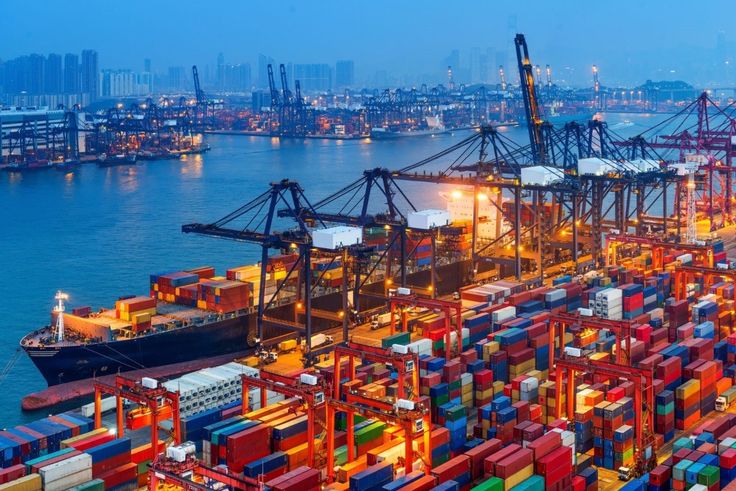
Entering the post–Lunar New Year slack season, the global ocean freight market has begun to record notable adjustments in freight rate levels. Data from the Freightos Baltic Index indicates that container freight rates on major trade lanes such as Asia–U.S. and Asia–Europe are trending downward compared to the pre-holiday peak season, when cargo volumes were front-loaded ahead of the Tet holiday.
What should import–export enterprises pay attention to amid early 2026 fluctuations?
This development reflects a familiar market pattern: transportation demand cools after enterprises complete their year-end shipment plans, while global fleet capacity remains high due to numerous new vessel deliveries in 2025. When supply exceeds demand, carriers are forced to adjust rates and optimize sailing schedules to maintain vessel utilization. Lower freight levels in the short term may create favorable conditions for importers; however, this adjustment also comes with the risk of blank sailings and service reallocation, making schedule reliability something that must be closely monitored.
Beyond supply–demand factors, the early 2026 market is also affected by policy movements and structural shifts within the maritime industry. In the United States, the government is revisiting its direction to protect the domestic shipbuilding industry through the Maritime Action Plan. One notable proposal is to impose port fees on cargo arriving at U.S. ports on foreign-built vessels, with projected charges ranging from USD 0.01 to USD 0.25 per kilogram of cargo. If implemented, the additional cost per container could increase significantly, placing pressure on both exporters to the U.S. and importers in that market. Given that most of the global container fleet is built outside the U.S., adjustments in routing strategies and pricing structures by carriers are entirely possible.
In parallel with policy factors, the market is also witnessing large-scale restructuring within the shipping industry. Recently, Hapag-Lloyd reached an agreement to acquire ZIM. If approved, this deal would strengthen the carrier’s position among the world’s largest container shipping lines and increase its market share on Far East–North America and Transatlantic routes. This consolidation trend reflects growing competitive pressure as transport capacity expands faster than actual demand growth. Carriers are therefore compelled to scale up and optimize network structures to maintain cost advantages.
In terms of freight rates, following the pre-Tet peak season, several East–West trade lanes have recorded downward adjustments. The Asia–U.S. East Coast route declined significantly, while services to North Europe and the Mediterranean also cooled compared to the end of last year. However, current rate levels remain influenced by carriers’ capacity control strategies through blank sailings and schedule adjustments. Adverse weather at certain West Mediterranean and North European ports has only caused temporary delays, not prolonged disruptions, but it still demonstrates that operational factors may continue to impact supply chain stability.
Early 2026 fluctuations are creating three main impacts on the global supply chain. First is mid- and long-term cost risk in the U.S. market if protectionist measures are implemented, potentially altering transportation cost structures and routing strategies. Second is the trend of capacity reallocation across trade lanes as carriers adjust networks to new trade demand patterns, particularly amid trade diversification away from the U.S. market. Third is prolonged oversupply pressure, which may continue to drive freight rate volatility, accompanied by capacity control measures such as blank sailings, voyage adjustments, and disruption-related surcharges.
CONCLUSION
From the perspective of THT Cargo Logistics, the post-Tet period is an opportune time for enterprises to review transportation strategies, renegotiate freight contracts, and build flexible contingency plans in anticipation of potential policy changes. Although current freight levels are adjusting in favor of cargo owners, market uncertainty remains high due to the combined effects of trade policy shifts, carrier restructuring, and global oversupply pressure. Proactively monitoring the market, updating policy developments, and working closely with logistics partners will help enterprises better control costs and ensure supply chain stability throughout 2026.
👉 Contact THT Cargo Logistics for detailed consultation on ocean freight and supply chain solutions during the 2026 Tet season.
——✭✭✭✭✭——–
THT CARGO LOGISTICS – Comprehensive Logistics Solutions for FDI Enterprises
Hotline: 028 3811 1729 / 0938 957 507
Zalo OA: https://zalo.me/2358013801847941851
Website: thtcargologs.com.vn
LinkedIn: https://www.linkedin.com/company/thtcargologistics
Get free consultation and suitable customs clearance solutions today!
Visits: 29