

Strait of Hormuz in Turmoil: Iran Imposes Cryptocurrency Transit Fees – Implications for Global Supply Chains
1. A Shocking Move: Iran Imposes Transit Fees in Cryptocurrency
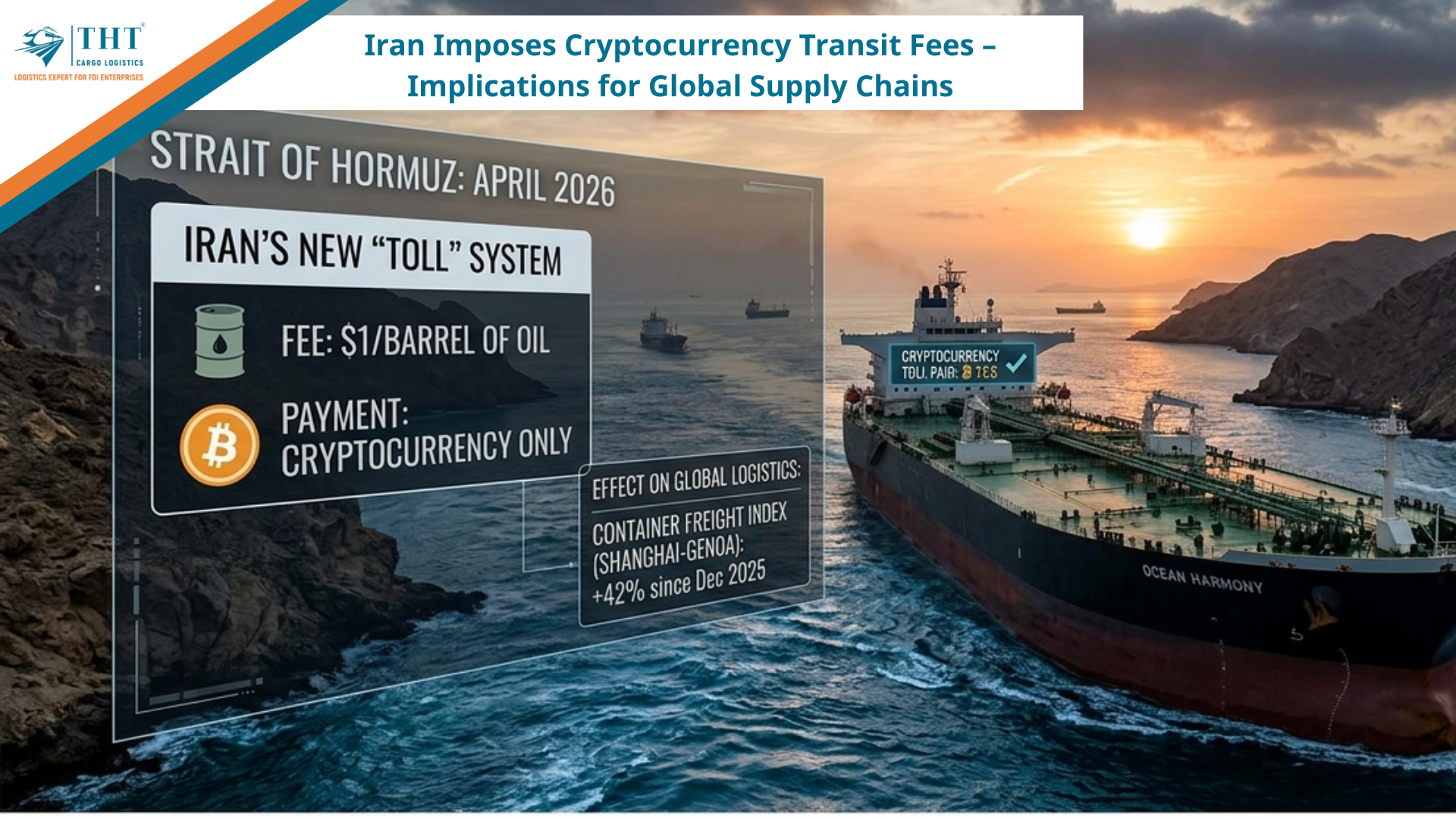
According to recent reports (Vietstock, April 10, 2026), the Iranian government has shaken the maritime market by requiring oil tankers passing through the Strait of Hormuz to pay “transit fees” using cryptocurrencies, particularly Bitcoin.
- Bypass sanctions: Cryptocurrency enables Iran to maintain cash flow outside the US dollar-based financial system.
- Increase state revenue: Reinforce its control over one of the world’s most strategic waterways.
2. Fee Structure and Advanced Monitoring Systems
Despite signals of a preliminary ceasefire agreement between the US and Iran (April 9, 2026), the situation on the ground remains highly complex.
- Extremely high fees: Up to USD 1 per barrel. For VLCC supertankers, this could amount to millions of dollars per transit.
- Advanced monitoring systems: Iran has deployed electronic surveillance and intensified patrols, asserting that the Strait will “never return to its previous state.”
- Rising cost risks: If widely enforced, global logistics costs will surge, directly impacting fuel prices and consumer goods worldwide.
3. Immediate Impact on Container Freight Rates
The disruption and security concerns in the Gulf region have quickly reflected in freight markets.
- Freight index surge: Key routes such as Shanghai – Genoa have increased by approximately 42% compared to late 2025.
- New pricing thresholds: Rates have exceeded USD 2,500/FEU (40-foot container) on multiple routes.
- Additional surcharges: Carriers are adjusting routes and applying War Risk Surcharges due to instability.
4. Recommendations for Import-Export Businesses
In this highly volatile period, businesses should proactively respond:
- Closely monitor shipment schedules: Stay updated with carrier announcements regarding route changes and new surcharges.
- Negotiate flexible contracts: Include insurance clauses covering geopolitical risks.
- Prepare contingency budgets: Anticipate sustained high freight rates throughout Q2 2026.
Conclusion
The Strait of Hormuz situation highlights how geopolitical risks can rapidly disrupt global supply chains. Businesses must remain agile, informed, and financially prepared to navigate ongoing uncertainties in international logistics.
Looking for Optimal Logistics Solutions?
With extensive experience and a deep understanding of the international market, we are confident in providing safe, fast, and cost-effective transport solutions.
Visits: 13