

OFFICIAL LETTER 16499 GUIDELINES ON IMPORTED GOODS LABELING SIZE REQUIREMENTS IN 2026
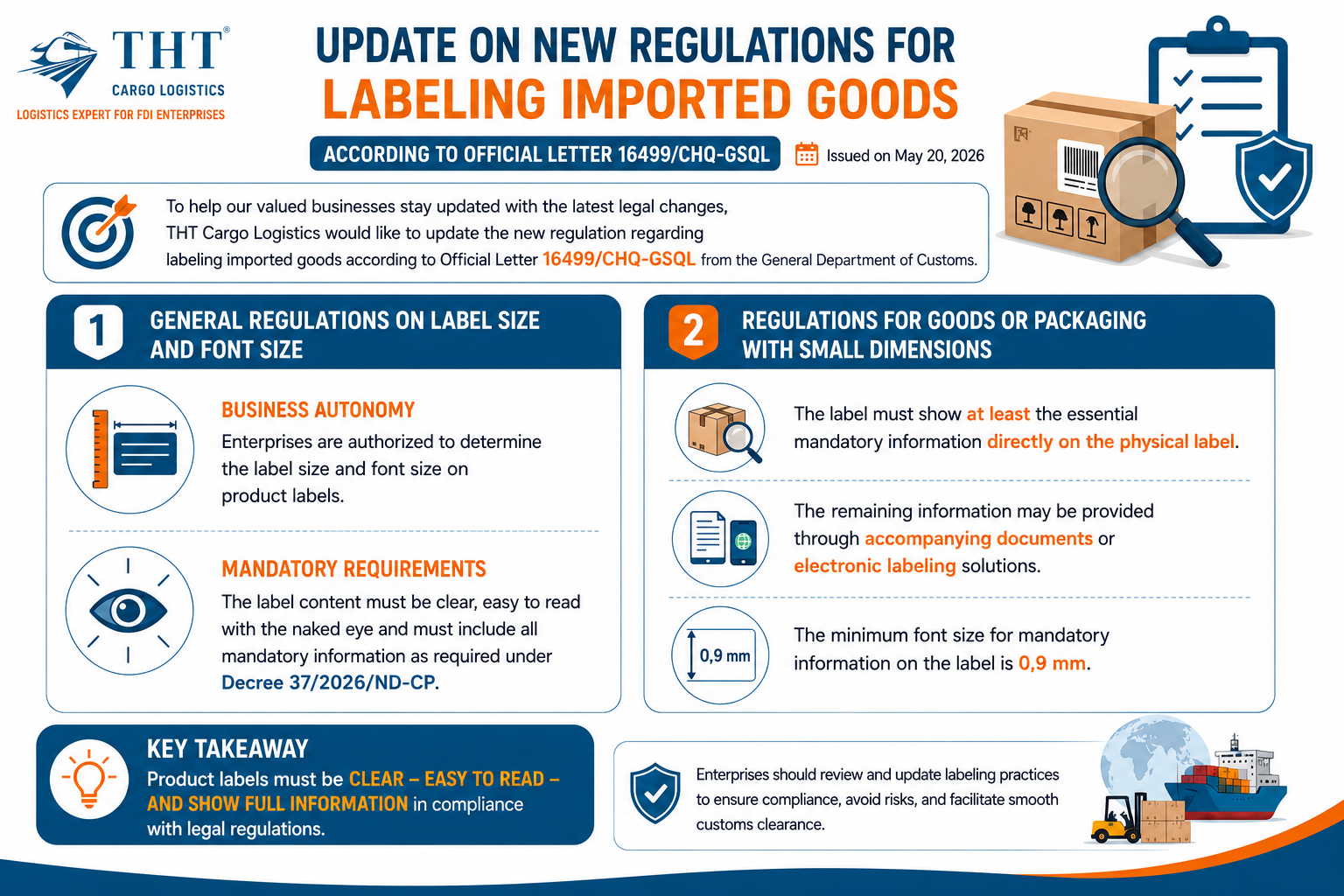
The new guidance clarifies important requirements regarding label size, font size, and the display of mandatory information on imported goods labels, especially for products with small packaging or limited labeling space.
1. Businesses Are Allowed to Determine Label Size Independently
According to the new guidance, businesses are allowed to independently determine:
- The size of product labels
- The font size displayed on labels
However, label design and information presentation must still fully comply with current legal requirements.
- Label contents must be clear and easily readable by the naked eye.
- Mandatory information must be displayed fully, accurately, and clearly.
- Labeling must comply with the provisions of Decree No. 37/2026/NĐ-CP.
This regulation provides businesses with greater flexibility in packaging design and information arrangement for different product categories.
2. Regulations for Small-Sized Goods or Packaging
For goods or packaging with limited size, Customs authorities allow businesses to apply more flexible methods for displaying information.
- The physical label must display the minimum mandatory basic information.
- Remaining information may be displayed through:
- Accompanying documents
- Electronic labels
This regulation helps businesses handle products more flexibly in cases such as:
- Small-sized products
- Packaging with limited printing space
- Specialized equipment or technical components
3. Minimum Font Size Requirements on Labels
According to Official Letter 16499/CHQ-GSQL, the minimum font size requirement for mandatory information on goods labels is specified as follows:
Businesses should pay particular attention to:
- Ensuring information is clearly readable by the naked eye
- Avoiding excessively small fonts that make information difficult to identify
- Ensuring consistency between label information and import documentation
4. Practical Notes for Import Businesses
During actual implementation, businesses should proactively review:
- Current product label designs
- The ability to display all mandatory information on packaging
- The consistency between actual labels and import documentation
- The use of electronic labels or accompanying documents for small-sized products
Standardizing product labels early will help businesses:
- Reduce the risk of label amendment requests
- Minimize Customs inspection issues
- Ensure smooth customs clearance progress
- Avoid administrative penalties related to labeling violations
5. Perspective from THT Cargo Logistics
The new guidance under Official Letter 16499/CHQ-GSQL reflects an increasing focus on transparency and traceability in imported goods labeling management.
For import-export businesses, especially FDI enterprises or companies importing consumer goods, technical equipment, and electronic components, reviewing product labeling requirements from the purchasing and packaging design stage can significantly reduce risks during Customs procedures.
THT Cargo Logistics currently supports businesses in:
- Reviewing imported goods labeling regulations
- Checking label compliance with Customs documentation
- Providing import compliance consulting services
- Supporting businesses in handling label inspection issues
Need Support Reviewing Imported Goods Labels?
THT Cargo Logistics is ready to support businesses in reviewing labeling regulations, consulting on import compliance, and handling Customs-related labeling issues in accordance with the latest regulations.
Visits: 32