


- 1. Understanding the Difference Between Detention and Demurrage
- 2. Four Most Common Root Causes at FDI Manufacturing Plants
- 3. Why D&D Is More Difficult to Control Than Other Logistics Costs
- 4. A Systematic Approach to Controlling D&D
- Detention & Demurrage Control Checklist for FDI Manufacturing Logistics Teams
- Building a Long-Term D&D Control System
- Need Support in Controlling Detention & Demurrage for Your FDI Factory?
When working with FDI manufacturers, one of the most common questions raised by logistics and supply chain teams is:
“Why are we constantly charged Detention & Demurrage (D&D) even though we try to handle shipments as quickly as possible?”
In most cases, the answer is not about how fast each shipment is processed. The real issue is that the company’s internal process has not been designed to prevent D&D from occurring in the first place. This article takes a closer look at how D&D charges are calculated, practical negotiation points with shipping lines, and how companies can establish an effective D&D control system as a genuine operational KPI.
Within the logistics cost structure of many FDI manufacturers, detention and demurrage (D&D) are among the most frequently recorded “unplanned logistics expenses”—yet they are also among the least analyzed in terms of root causes.
Many companies simply pay the shipping line’s invoice and move on to the next shipment without establishing any monitoring or prevention mechanism. As a result, the same mistakes occur repeatedly, and accumulated D&D expenses can easily reach tens of thousands of US dollars each year without anyone taking ownership of the problem.
1. Understanding the Difference Between Detention and Demurrage
Before analyzing the risks, it is important to distinguish these two concepts, as many companies use them interchangeably, resulting in disputes with shipping lines that target the wrong issue.
Demurrage
Demurrage is charged when a container remains at the port terminal (CY) after the shipping line’s free time has expired.
Free time normally ranges from 3 to 7 days, depending on the shipping line and port, starting from the vessel’s arrival date.
In simple terms, demurrage is the penalty for collecting cargo from the port too late.
Detention
Detention is charged when the container has already been picked up from the port but is not returned to the shipping line’s designated depot before the detention free time expires.
Detention free time is typically 3 to 5 days after the container leaves the port.
In simple terms, detention is the penalty for keeping the empty container at the warehouse or factory for too long.
These two charges are completely independent. They may occur separately or simultaneously, and both are calculated on a daily basis using escalating tariffs—the longer the delay, the higher the daily charge.
For a standard 40HC container, demurrage or detention commonly ranges from USD 30–80 per day during the first week, increasing to approximately USD 150–300 per day by the third week, depending on the shipping line.
2. Four Most Common Root Causes at FDI Manufacturing Plants
Delayed or Incorrect Customs Documentation
This is the number one cause of D&D.
When discrepancies exist in the invoice, packing list or bill of lading—such as incorrect product descriptions, quantities, weights or HS codes—the import-export team must contact the supplier to obtain corrected documents or request a Letter of Correction.
Meanwhile, the container remains at the port, and the free time countdown has already started from the vessel’s arrival.
For suppliers located in different time zones (Japan, Korea or Taiwan), waiting for email responses and internal approvals can easily consume two or three days.
Warehouse Not Ready to Receive Cargo
This situation is common among rapidly expanding FDI factories.
Although cargo arrives on schedule, warehouse space may still be occupied by previous shipments, while forklifts and manpower are insufficient for immediate unloading.
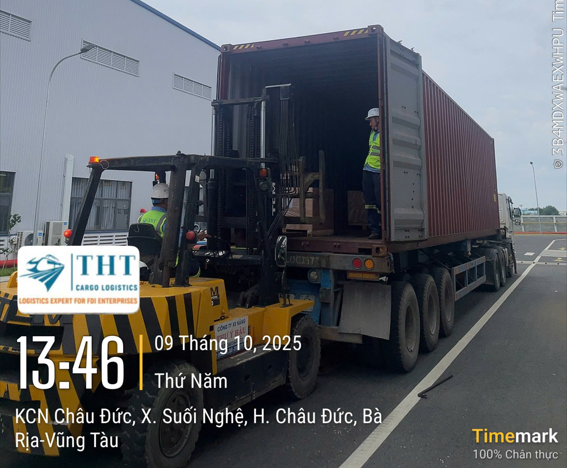
As a result, containers remain parked at the factory yard for two to four additional days before unloading, with the entire period counted as detention.
Lengthy Internal Approval Process
Some multinational corporations require multiple approval levels before cargo release is authorized, or they require confirmation from the Quality Department that inspection documents are complete before goods may enter the warehouse.
Although these controls are reasonable from a governance perspective, the absence of clearly defined internal SLAs often results in containers remaining idle over weekends or public holidays.
Unexpected Specialized Inspection
As discussed in previous articles, when a shipment is selected for specialized inspection, processing time may extend to 7–15 working days, whereas demurrage free time is typically only 3–5 days.
Consequently, the entire inspection period generates demurrage charges, and companies generally have limited grounds to request waivers because specialized inspection is a mandatory government requirement rather than a shipping line error.
3. Why D&D Is More Difficult to Control Than Other Logistics Costs
One unique characteristic of D&D is that the cost is incurred long before the company actually becomes aware of it.
Businesses often receive D&D invoices two to four weeks after returning the container, by which time the incident has already passed and there is no opportunity to intervene.
If companies have a real-time free time monitoring system, however, they can take corrective action while the shipment is still within the free period and avoid unnecessary costs.
Another common challenge is that responsibility for D&D often falls into a grey area shared by the import-export team, warehouse operations and the freight forwarder.
The import-export team believes its responsibility ends after customs clearance, while the warehouse claims it cannot receive the cargo due to incomplete documentation. Meanwhile, the forwarder simply follows customer instructions.
As a result, no one actively monitors the free time countdown, and everyone is surprised when the D&D invoice eventually arrives.
4. A Systematic Approach to Controlling D&D
Companies that successfully control D&D are not necessarily luckier—they simply manage free time as a genuine logistics KPI rather than reacting to individual incidents.
Achieving this requires three essential elements:
- Real-time visibility of container status.
- Clearly defined internal Service Level Agreements (SLAs).
- The ability to escalate risks immediately when issues arise.
Regarding visibility, a capable freight forwarder should automatically notify customers before free time expires instead of waiting for inquiries.
If the current forwarder does not provide such a system, companies should establish a simple tracking file containing:
- Container number
- Vessel arrival date
- Demurrage free time expiry date
- Actual cargo pick-up date
- Detention free time expiry date
- Actual empty container return date
Updating this file daily is usually sufficient to identify potential D&D risks before charges occur.
Regarding negotiations with shipping lines, companies may request D&D waivers or reductions when charges result from force majeure events, mandatory specialized inspections, natural disasters, or shipping line errors such as rollovers or misrouting.
The likelihood of success depends largely on whether the company can provide sufficient supporting documentation and whether it has experience negotiating with the respective shipping line.
Detention & Demurrage Control Checklist for FDI Manufacturing Logistics Teams
Before Cargo Arrival
- Confirm the Demurrage and Detention Free Time with your freight forwarder immediately upon booking. Do not rely on default assumptions—obtain written confirmation in the Booking Confirmation.
- For shipments that may be subject to specialized inspection, discuss possible Free Time extension options with the shipping line or freight forwarder before the cargo arrives.
- Prepare a complete customs documentation package before the vessel arrives, paying particular attention to the Invoice and Packing List to minimize the need for document amendments after cargo arrival.
- Notify the warehouse team of the vessel’s ETA in advance so that manpower, forklifts, and warehouse space can be prepared at least three days before arrival.
While the Cargo Is at the Port
- Monitor container status daily from the vessel’s arrival instead of relying solely on updates from the freight forwarder.
- Identify the Demurrage Free Time expiry date and set an internal alert at least two days in advance.
- If customs documentation issues arise, escalate them immediately and resolve them on the same day to avoid delays extending into the next business day or over the weekend.
- If an unexpected specialized inspection is required, immediately notify the shipping line and request a Free Time extension based on the fact that the inspection is a mandatory government procedure.
After Cargo Pickup from the Port
- Determine the Detention Free Time expiry date immediately after the container leaves the port.
- Prioritize unloading the cargo and returning the empty container within the Free Time period to avoid excessive container retention at the factory.
- If the empty container cannot be returned on time due to truck scheduling or depot congestion, proactively contact the shipping line to request a Free Time extension before the free period expires.
- Record the actual empty container return date and retain the Equipment Interchange Receipt (EIR) for verification when the Detention & Demurrage invoice is received.
When Receiving the Detention & Demurrage Invoice
- Verify the D&D invoice against internal tracking records, including vessel arrival date, Free Time, cargo pickup date, and empty container return date.
- If incorrect charges are identified (such as an incorrect charge commencement date, charges applied during exempted holidays, or incorrect tariff rates), submit a written claim immediately with supporting evidence.
- If D&D charges result from force majeure events or shipping line issues such as rollover, misrouting, or vessel delays beyond the ETA, prepare a waiver request package including a timeline of events, supporting documents, and a proposed resolution.
- Consolidate all D&D costs by shipment into a monthly report to analyze root causes and identify opportunities for process improvement.
Building a Long-Term D&D Control System
Managing Detention & Demurrage should go beyond handling individual invoices. Companies should establish a long-term management system to continuously reduce D&D occurrences and improve overall supply chain performance.
- Establish KPIs to monitor the percentage of shipments incurring Detention & Demurrage each month and set continuous improvement targets.
- Develop internal SLAs for every step of the logistics process, including customs documentation completion before ETA, warehouse readiness confirmation, and cargo release approval timelines.
- Require freight forwarders to provide automated email or system alerts when containers have only two days of Free Time remaining. This should be considered one of the key service criteria when selecting logistics partners.
Need Support in Controlling Detention & Demurrage for Your FDI Factory?
THT Cargo Logistics helps FDI manufacturers monitor container status in real time, provides early warnings of Detention & Demurrage risks, coordinates with shipping lines to negotiate charge reductions or waivers when justified, and advises on building internal D&D control procedures tailored to each factory’s operational model and business scale.
If your company is looking for practical solutions to reduce unexpected logistics costs, improve container visibility, and minimize Detention & Demurrage charges, contact THT Cargo Logistics and let our experts help you develop the right strategy.
Visits: 14