

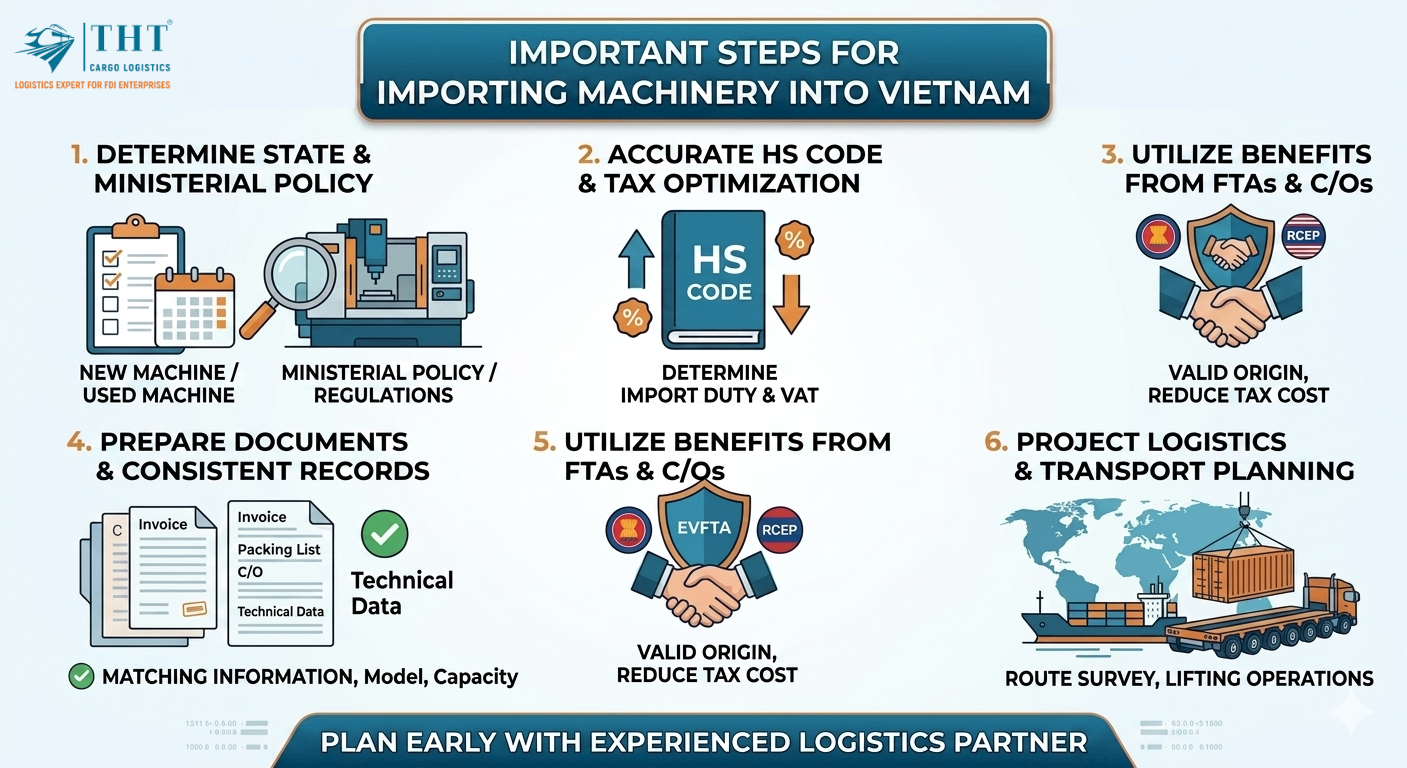
- Why Must Enterprises Pay Special Attention to Machinery Import Procedures?
- 1. Accurately Define the Machinery Type Prior to Importation
- 2. Guarantee Accurate HS Code Classification from the Start
- 3. Prepare a Complete and Identical Set of Import Documentation
- 4. Crucial Guidelines for Certificates of Origin (C/O)
- 5. Proactively Assess Transportation for Oversized & Heavy Equipment
- 6. Synchronize Customs Clearance with Overall Project Schedules
- 7. The Strategic Role of a Specialized Logistics Provider in Machinery Projects
- Conclusion
- THT Cargo Logistics — End-to-End Supply Chain Solutions for Industrial Facilities in Vietnam
CRITICAL CONSIDERATIONS WHEN IMPORTING MACHINERY INTO VIETNAM: HOW ENTERPRISES CAN PREPARE TO AVOID RISKS
The import of machinery and equipment plays a vital role for manufacturing enterprises, particularly FDI companies investing in greenfield projects or expanding their factories in Vietnam. However, this commodity group involves stringent regulatory compliance, technical documentation, HS code classification, and customs procedures. A single minor oversight during preparation can lead to customs clearance delays, substantial port storage penalties, and directly disrupt the project’s deployment timeline.
In this article, THT Cargo Logistics shares key insights that enterprises must focus on when handling machinery import procedures into Vietnam to ensure seamless transportation, swift customs clearance, and timely equipment installation.
Why Must Enterprises Pay Special Attention to Machinery Import Procedures?
Unlike standard commercial goods, industrial machinery and equipment typically carry high capital value, feature unique physical dimensions, and directly impact an enterprise’s manufacturing capabilities. In many instances, these items fall under specialized line-agency management or require rigorous compliance assessments prior to customs release.
Delays in the import process not only inflate logistics costs but can also severely undermine:
| 📌 | The construction or expansion timeline of the factory. |
| 📌 | The installation and commissioning schedules of production lines. |
| 📌 | Delivery commitments to end clients. |
| 📌 | The overall investment efficiency and ROI of the project. |
For newly established FDI enterprises in Vietnam, grasping these import regulations from day one is essential to mitigating operational risks during project rollout.
1. Accurately Define the Machinery Type Prior to Importation
Brand New vs. Used Machinery
This is the foundational detail that enterprises must clarify from the outset:
- Brand new machinery: Import procedures are generally more straightforward, provided the items do not fall under specialized line-agency management lists.
- Used/Second-hand machinery: Enterprises must strictly verify import eligibility under current statutory criteria regarding equipment age limits (typically under 10 years), technical standards, and compliance with safety and environmental protection rules.
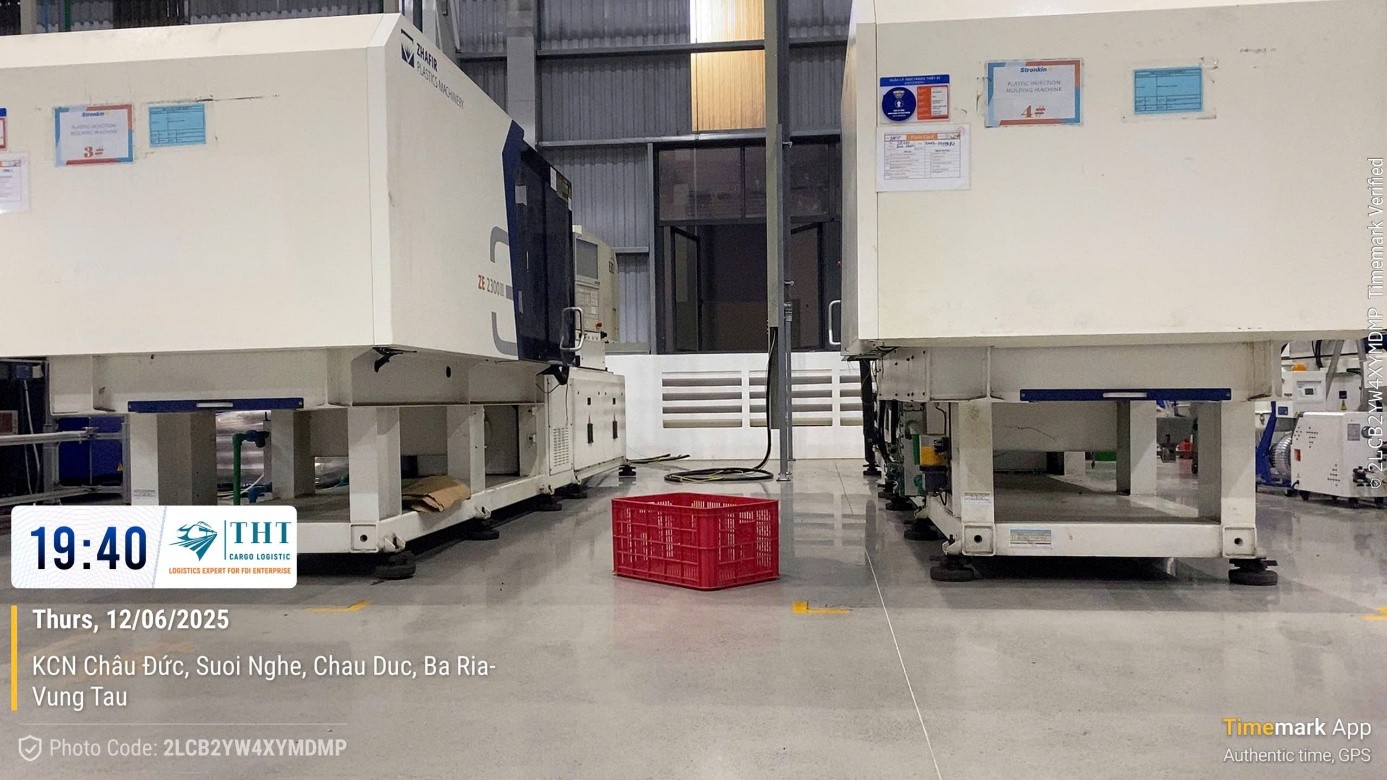
In practice, many manufacturers choose to relocate entire production lines from China, Japan, or other countries to Vietnam. In such scenarios, assessing the import conditions for second-hand machinery must be conducted during the initial project planning phase to avoid critical complications once the cargo reaches Vietnamese ports.
Determine Specialized Line-Agency Management Requirements
Certain types of technical machinery fall under the jurisdiction of specific ministries and require targeted processing:
| Managing Authority | Typical Regulatory Requirement / Procedure |
|---|---|
| Ministry of Science and Technology | Regulates equipment age, mandatory inspections of used machinery, and second-hand technological lines. |
| Ministry of Industry and Trade | Manages energy efficiency compliance and safety certifications for high-pressure industrial equipment. |
| Ministry of Information and Communications | Issues import permits for radio transmission hardware and integrated telecommunications equipment. |
| Ministry of Health | Handles licensing and risk classification for medical devices and specialized laboratory equipment. |
Enterprises must cross-examine these requirements in advance to determine whether their goods need permits, quality testing, or other specialized inspections before finalizing commercial procurement contracts.
2. Guarantee Accurate HS Code Classification from the Start
The Strategic Role of HS Codes for Imported Machinery:
The HS Code (Harmonized System code) serves as the primary legal baseline for customs authorities to determine:
- Commodity management policies and mandatory specialized inspection frameworks.
- Applicable tariff liabilities (Import Duty and Import VAT rates).
- Eligibility for preferential tariff treatment under Free Trade Agreements (FTAs).
Classifying machinery is uniquely complex because an integrated production line or heavy equipment setup often consists of numerous decoupled components, spare parts, and auxiliary modules shipped together or in phases.
3. Prepare a Complete and Identical Set of Import Documentation
One of the most frequent causes of customs hold-ups or clearance bottlenecks at borders is an incomplete dossier or data discrepancies across original shipping documents.
| Core Inbound Documentation | Common Pitfalls to Avoid |
|---|---|
| • Sales Contract / Purchase Order • Commercial Invoice • Packing List |
❌ Discrepancies in product names or technical descriptions between the Invoice and Packing List. |
| • Bill of Lading / Airway Bill • Customs Import Declaration |
❌ Misrepresenting or mistyping equipment model numbers compared to physical factory nameplates. |
| • Technical Catalogue / Datasheets • Certificate of Origin (C/O) – if applicable |
❌ Omitting technical catalogues that verify power output, capacity, or primary industrial functions. |
Such seemingly minor errors can prompt customs authorities to stop cargo flows for physical inspections, demand formal explanations, or order official appraisals—extending clearance timelines from days to weeks.
4. Crucial Guidelines for Certificates of Origin (C/O)
For industrial operations, utilizing a valid Certificate of Origin (C/O) is a key mechanism to drastically lower import duty expenses and optimize corporate working capital.
Vietnam is a signatory to numerous Free Trade Agreements (FTAs) such as ASEAN, ACFTA (China), AJCEP (Japan), RCEP, EVFTA (Europe), and CPTPP. If the imported machinery satisfies origin criteria, enterprises can claim special preferential tariff rates, which frequently bring import duties down to 0%.
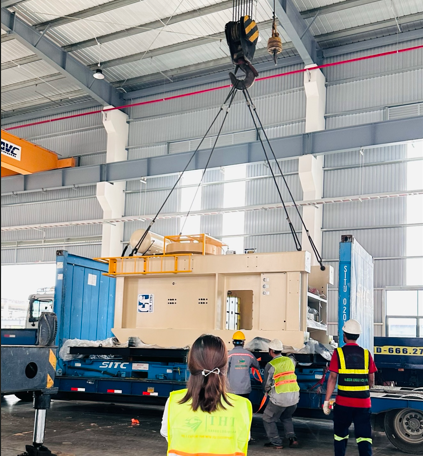
5. Proactively Assess Transportation for Oversized & Heavy Equipment
Not all industrial machinery can fit neatly into standard shipping containers. For large-scale equipment such as heavy hydraulic presses, large CNC machines, integrated production lines, energy infrastructure, or heavy construction units, enterprises must conduct detailed route and site surveys well before shipping.
Coret transport variables to engineer early:
- Physical Dimensions: Document exact length, width, height, and net/gross weights of separate breakbulk or un-containerized packages.
- Lifting Infrastructure: Arrange specialized heavy-lift cranes both at arrival terminals and the plant site for offloading and final positioning.
- Domestic Routing: Survey vertical clearances of overpasses, overhead power lines, and bridge weight limits from the port hub to the industrial zone.
- Specialized Fleet: Secure specialized assets like low-boy trailers, multi-axle hydraulic platform trailers, or dedicated out-of-gauge (OOG) transport combinations.
Executing an early transport assessment ensures cargo does not get stranded at the port due to a lack of specialized domestic transport solutions or an unready factory foundation.
6. Synchronize Customs Clearance with Overall Project Schedules
A common operational pitfall is delaying customs documentation review until the vessel is nearing port waters. This puts intense pressure on logistics teams and increases the risk of systemic data errors due to rushed filings.
Instead, an effective supply chain management framework requires parallel execution:
| Step 1 | Finalize HS code classification and verify tariff structures during contract negotiations. |
| Step 2 | Screen for regulatory restrictions or specialized line-agency permit triggers before issuing a Purchase Order (PO). |
| Step 3 | Require overseas suppliers to provide technical schematics and blueprints for pre-verification before cargo loading. |
| Step 4 | Initiate specialized agency registrations immediately upon receiving pre-alert shipping files. |
7. The Strategic Role of a Specialized Logistics Provider in Machinery Projects
For FDI operations launching in Vietnam or entities executing factory expansion phases, an experienced logistics provider is far more than a simple freight vendor—they act as a critical operational co-pilot guiding the project through local regulatory frameworks.
Strategic support metrics delivered by a professional logistics partner include:
| ✔ | Providing expert advisory on import policies and shifting regulatory decrees. |
| ✔ | Conducting comprehensive audits of document integrity prior to origin vessel departure. |
| ✔ | Analyzing complex component structures to lock down precise HS code grouping. |
| ✔ | Reviewing C/O compliance to legally optimize tariff exemptions and preferential rates. |
| ✔ | Managing brokerage entries and resolving customs inquiries swiftly at the border. |
| ✔ | Orchestrating end-to-end multi-modal international freight (Air/Sea) and domestic transport lanes. |
| ✔ | Managing complex site logistics, heavy offloading, and rigging onto final factory footings. |
Partnering with an experienced logistics firm right from the start isolates regulatory risks, keeps project milestones on track, and minimizes total supply chain overheads.
Conclusion
Importing machinery into Vietnam involves an intricate balance of logistics, regulatory compliance, HS classification, tariff optimization, and specialized inspections. Meticulous upfront preparation prevents customs delays, avoids unbudgeted operational liabilities, and ensures production lines start running on schedule.
For FDI enterprises launching greenfield investments or scaling up operations in Vietnam, building a structured customs and logistics roadmap is an indispensable element for overall project success.
THT Cargo Logistics — End-to-End Supply Chain Solutions for Industrial Facilities in Vietnam
THT Cargo Logistics is a premier corporate partner specializing in import-export compliance and complex industrial logistics legal support. Backed by an executive management tier holding 10 to 18 years of deep, hands-on field expertise, we deliver seamless, secure, and highly cost-optimized customs clearance and logistics solutions for machinery setups across Vietnam’s FDI sector.
Visits: 26