

NEW GUIDELINES ON CUSTOMS VALUATION AND CIRCULATION OF IMPORTED GOODS
1. Enterprise Rights When Customs Valuation Has Not Been Finalized
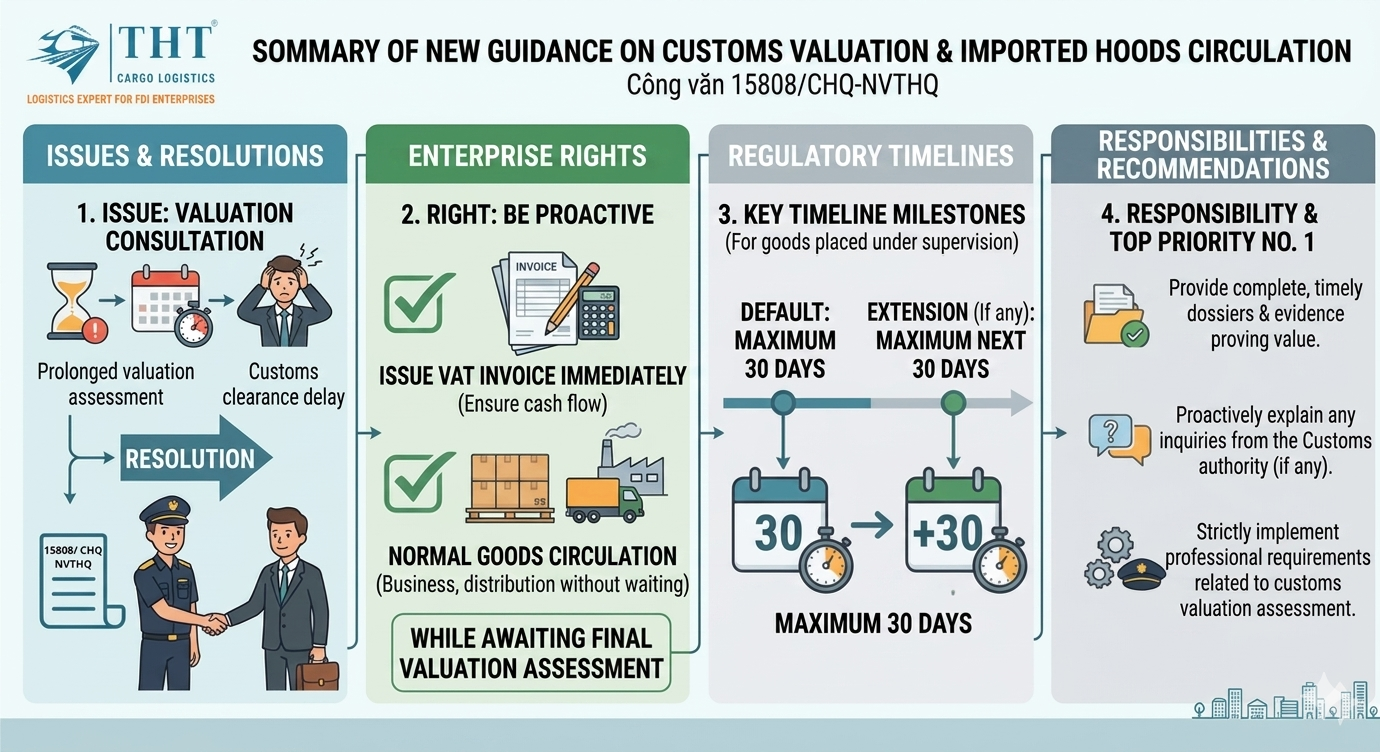
According to the new guidance, for shipments that have already been customs cleared or conditionally released but are still pending final customs valuation determination, enterprises are still allowed to proactively continue their business operations.
Enterprises are permitted to:
- Issue VAT invoices to customers and business partners to maintain cash flow and accounting documentation.
- Circulate goods for trading, distribution, and operational use in accordance with current regulations without waiting for the final customs valuation result.
This guidance helps businesses avoid unnecessary delays in business operations while customs authorities continue the valuation review process.
2. Time Limits for Temporary Release of Goods
Enterprises should pay close attention to the following timelines in order to avoid procedural violations or delays:
- Standard timeline: A maximum of 30 days from the date of goods release for imported goods brought back for preservation or storage.
- Extension cases: If an extension is required, the total duration from temporary release until final resolution must not exceed an additional 30 days.
Proper timeline management is critical to ensure compliance with customs procedures and avoid additional administrative risks.
3. Responsibilities of Enterprises
To facilitate a smooth customs clearance and valuation process, the Customs Department requires enterprises to maintain active and transparent cooperation throughout the review process.
Enterprises are responsible for:
- Providing complete and timely documents and supporting evidence related to customs valuation.
- Proactively explaining and clarifying any concerns raised by customs authorities.
- Strictly complying with all procedural requirements related to customs valuation determination.
Failure to provide sufficient supporting documentation may result in extended review timelines or additional customs inspections.
4. Why This New Guidance Matters for Businesses
Official Dispatch No. 15808 provides significant support for enterprises by allowing faster circulation of goods and reducing warehouse congestion risks while customs valuation is still under review.
A well-prepared valuation dossier helps enterprises:
- Reduce the risk of prolonged customs explanations
- Avoid delays in business operations
- Improve customs compliance transparency
- Minimize unexpected logistics and storage costs
5. Conclusion
The latest guidance under Official Dispatch No. 15808/CHQ-NVTHQ reflects a more flexible and business-supportive approach in customs valuation management.
While enterprises are now allowed to continue business operations before final customs valuation is completed, proactive preparation of customs documents and valuation evidence remains essential to ensure compliance and avoid future risks.
For businesses engaged in import-export activities, especially FDI enterprises and manufacturers with high-volume shipments, effective customs valuation management is increasingly becoming a critical part of supply chain stability and operational efficiency.
Need Support on Customs Valuation Procedures?
If your company needs support in preparing customs valuation dossiers, handling customs explanations, or optimizing import-export compliance procedures under the latest regulations, THT Cargo Logistics is ready to assist with practical and professional solutions.
Visits: 21