

What is EXW in Incoterms 2020?
In international trade, Incoterms play a crucial role in defining responsibilities, costs, and risks between the seller and the buyer. One of the most commonly used terms is EXW – Ex Works.
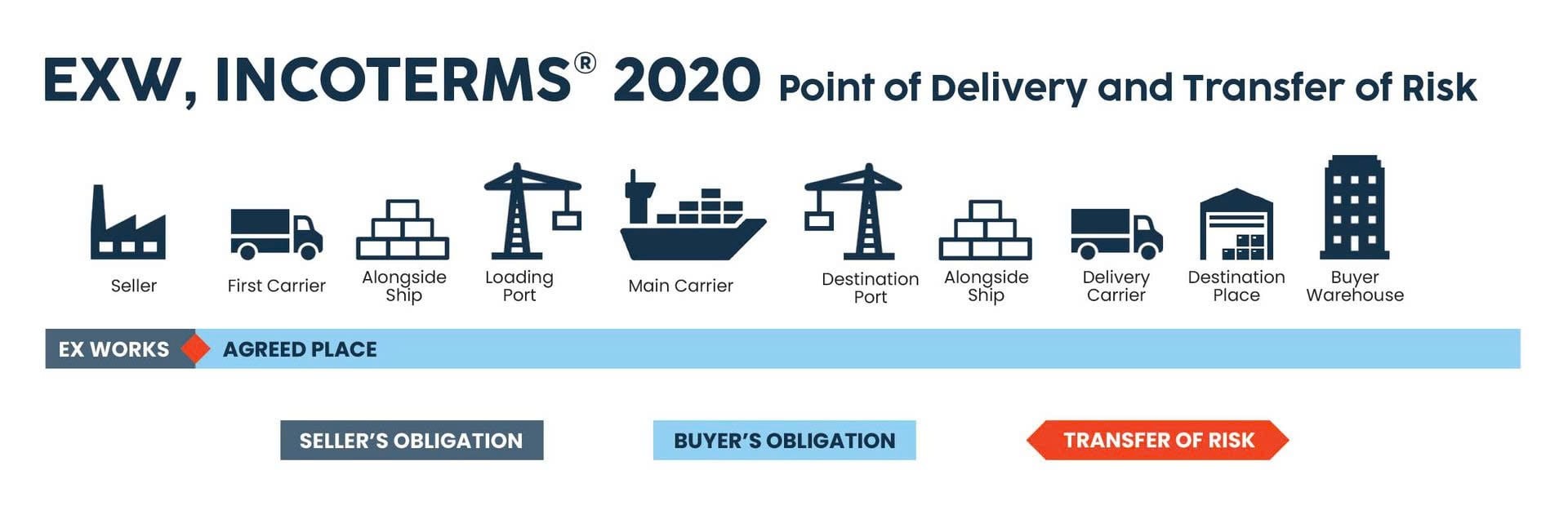
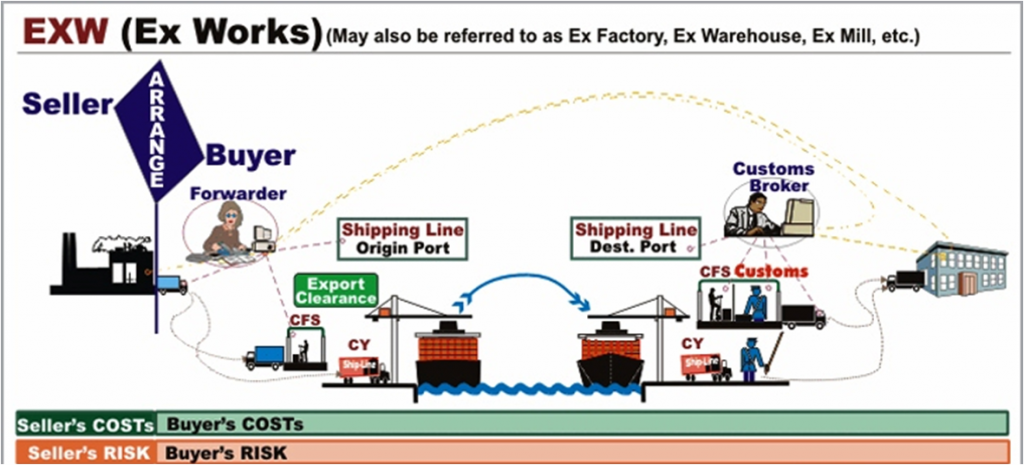
According to Incoterms® 2020, EXW means that the seller fulfills their delivery obligation when the goods are made available to the buyer at the seller’s premises, such as a factory, warehouse, or another agreed location. From that point onward, all logistics costs and risks are transferred to the buyer.
This means the buyer is responsible for almost the entire transportation process, including inland transport in the export country, export customs clearance, international transportation, and import procedures.
EXW is often used when the buyer has the capability to organize international logistics or works with a professional freight forwarder to manage the supply chain.
Responsibilities of the Seller Under EXW
Under EXW, the seller’s responsibilities are relatively limited. The seller is only required to prepare the goods in accordance with the contract and make them available at the agreed delivery location.
Specifically, the seller must prepare goods with the correct quantity and quality, package them appropriately for international transport, and provide basic documents such as the invoice and packing list. Additionally, the seller must notify the buyer when the goods are ready for pickup.
However, under EXW, the seller is not obligated to load the goods onto the transport vehicle and is not required to handle export customs clearance unless otherwise agreed in the contract.
Responsibilities of the Buyer Under EXW
In contrast to the seller, the buyer under EXW is responsible for almost the entire logistics process of the shipment.
After receiving notice that the goods are ready, the buyer must arrange transportation to the seller’s premises to collect the cargo. The buyer is then responsible for inland transport in the export country, export customs clearance, and arranging international transportation by sea or air.
Upon arrival in the importing country, the buyer continues with import customs clearance, payment of duties and taxes, and inland transportation to their warehouse. In many cases, the buyer also needs to purchase cargo insurance to minimize risks during international transport.
Due to this high level of responsibility, businesses often choose to work with freight forwarding companies to ensure efficient logistics operations.
Important Notes When Using EXW
EXW is not always suitable for international transactions. In many countries, only domestic companies are allowed to act as the exporter of record for customs declarations. Therefore, in practice, FCA is often recommended as an alternative to EXW, as the seller handles export clearance under FCA.
Logistics Process for EXW Shipments
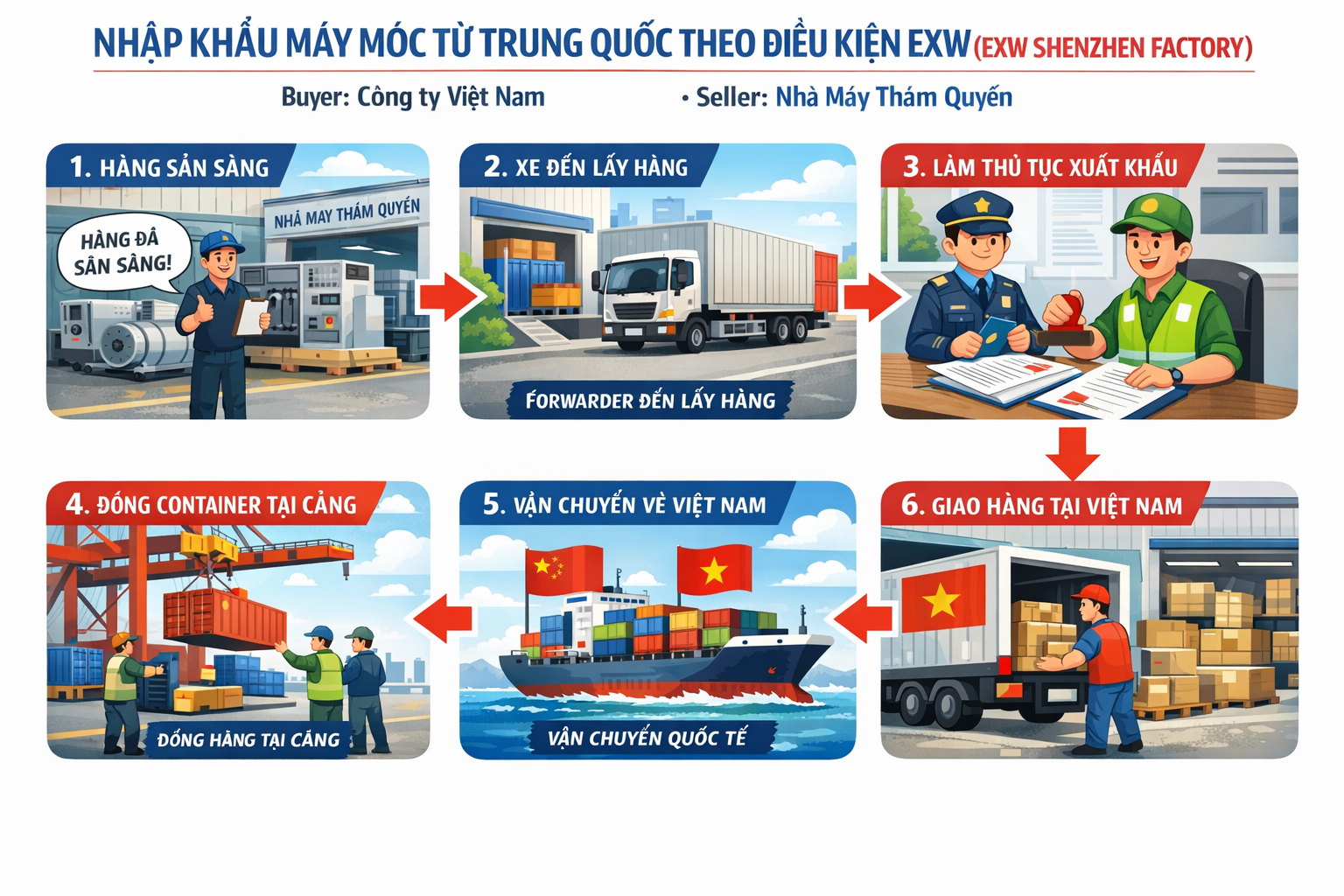
A shipment under EXW terms typically goes through multiple logistics stages from the time the goods are ready at the factory to final delivery at the importer’s warehouse.
The process usually begins when the supplier notifies that the cargo is ready. The logistics provider or freight forwarder then arranges inland transportation to collect the goods from the factory.
The cargo is transported to a port or ICD for export customs clearance. Once cleared, the container is delivered to the port and loaded onto a vessel or aircraft for international transport.
Upon arrival at the destination port, an arrival notice is issued, import customs clearance is completed, and the goods are finally delivered to the importer’s warehouse.
This process requires close coordination among multiple parties such as the supplier, forwarder, carrier, overseas agents, and customs authorities.
Why Do Businesses Choose EXW?
Many businesses choose EXW because it allows the buyer to have full control over the logistics chain. Under EXW, companies can select shipping lines, airlines, or transport providers that best suit their needs.
Additionally, direct logistics management enables companies to control transportation costs, optimize routes, and manage delivery schedules more effectively.
In global supply chains, EXW also allows businesses to leverage their existing freight forwarder network or logistics system to build optimal transportation solutions.
Challenges When Handling EXW Shipments
Although EXW provides high control for the buyer, it also comes with several operational challenges.
One common difficulty is arranging cargo pickup in the export country, especially when the buyer does not have a logistics partner there. Additionally, export customs procedures in many countries require a local entity to act as the declarant, making documentation handling more complex.
Moreover, logistics risks under EXW are transferred to the buyer at a very early stage, right when the goods are made available at the seller’s premises. Without an effective tracking system, businesses may face difficulties in monitoring shipment progress and controlling unexpected costs.
Role of the Freight Forwarder in EXW Shipments
In EXW transactions, the freight forwarder plays a central role in managing the international logistics chain.
The forwarder coordinates with the supplier to confirm cargo readiness, arranges inland transportation in the export country, and handles export customs clearance. Additionally, they are responsible for booking carriers, tracking shipments, and supporting import clearance at destination.
Through an international agent network, the freight forwarder also helps businesses control end-to-end logistics costs, ensure transparency of local charges, and minimize operational risks.
As a result, importers can focus on their core business while the logistics process is professionally managed.
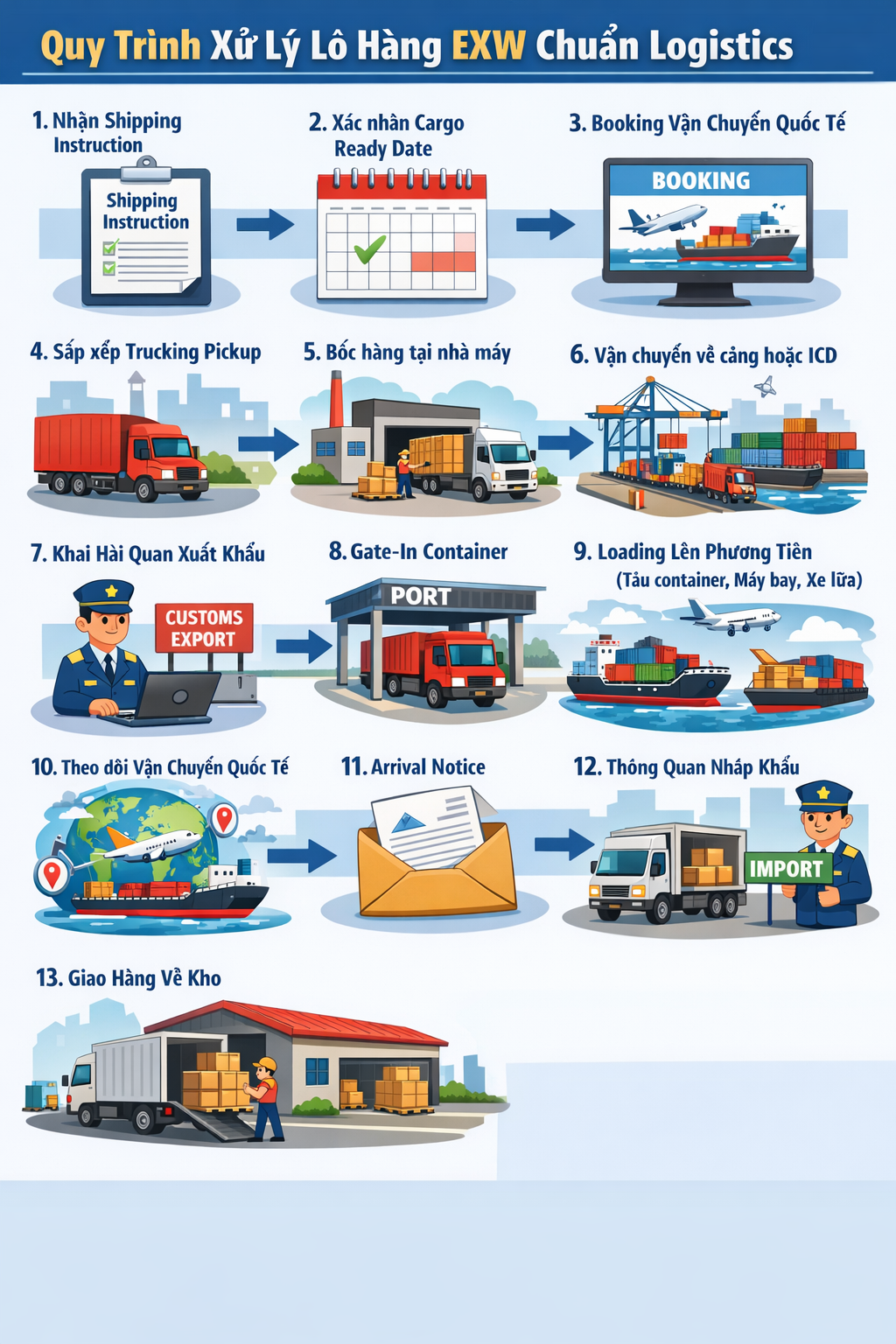
Standard EXW Shipment Handling Process
1.Receive Shipping Instruction
2.Confirm cargo ready date
3.Book international transport
4.Arrange trucking pickup
5.Load cargo at factory
6.Transport to port or ICD
7.Export customs clearance
8.Gate-in container
9.Load onto vessel or aircraft
10.Track international shipment
11.Arrival notice
12.Import customs clearance
13.Final delivery to warehouse
Comparison Between EXW and FCA
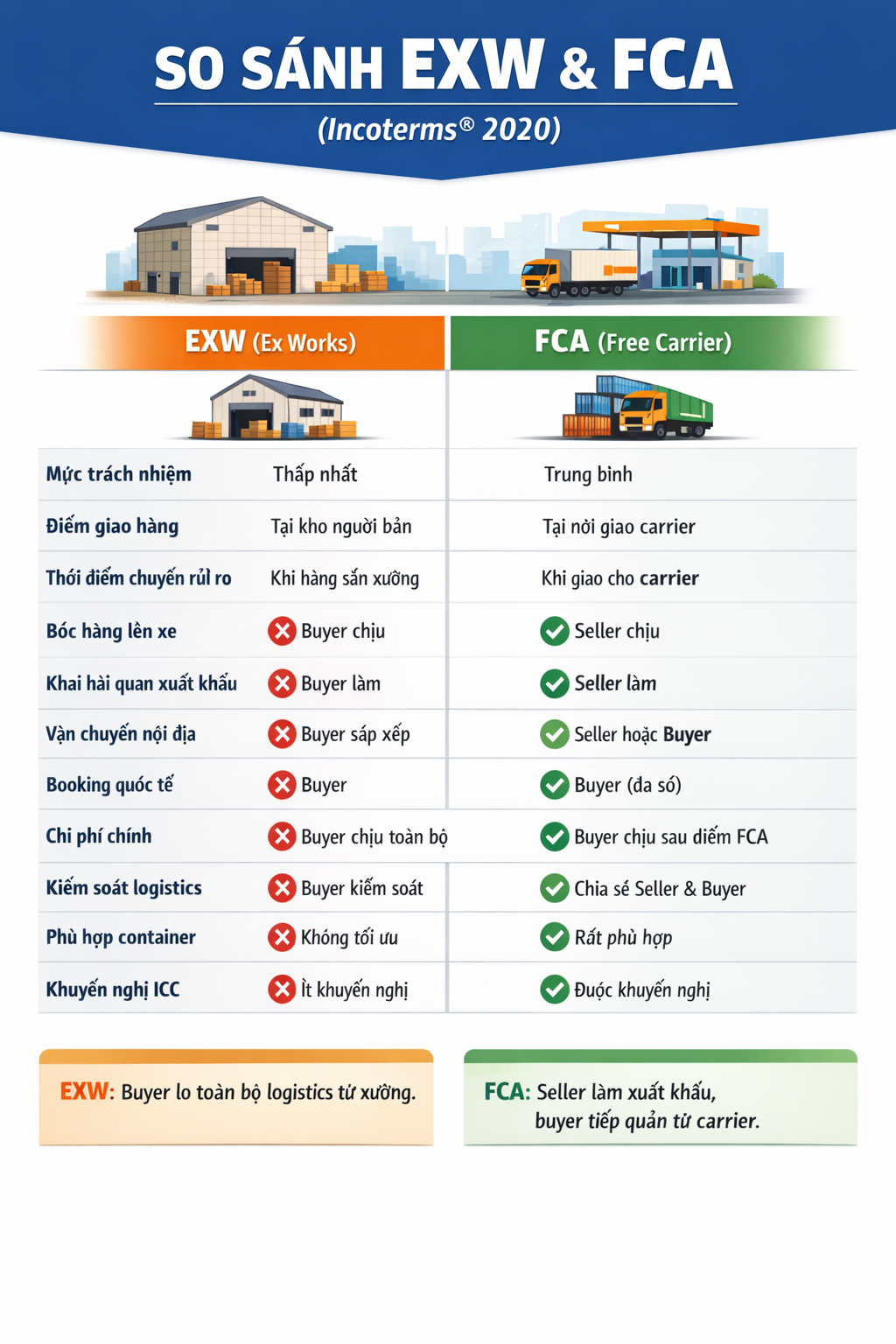
EXW: Buyer handles export clearance, risk transfers at seller’s premises.
FCA: Seller handles export clearance, risk transfers when goods are handed over to the carrier.
FCA is generally more suitable for international transactions.
Logistics Solutions for Importers Under EXW
In EXW transactions, most logistics responsibilities are transferred to the buyer at the seller’s premises. This means the importer must manage the entire international supply chain, including inland transport at origin, export customs clearance, international freight, and import procedures.
Due to the high level of responsibility, working with a capable freight forwarder is essential to ensure supply chain efficiency.
A professional logistics partner can provide:
Transport Planning Optimization
Freight forwarders analyze cargo characteristics, routes, and delivery requirements to design optimal transport solutions, balancing cost and transit time.
Origin Operation Management
For EXW shipments, origin operations carry the highest risk. The forwarder coordinates:
• supplier communication for cargo readiness
• trucking pickup arrangements
• cargo handling and export documentation
• compliance with export customs regulations
Effective management helps minimize storage, detention, and booking delays.
End-to-End Cost Control
Through global agent networks and freight procurement capabilities, forwarders help:
• estimate total landed cost
• ensure transparency of local charges
• reduce unexpected expenses
Shipment Visibility & Risk Management
Tracking systems based on milestones allow real-time monitoring and proactive handling of risks such as delays, schedule changes, or documentation issues.
End-to-End Coordination
The forwarder acts as a central coordinator among:
• supplier
• carrier
• overseas agents
• customs authorities
• importer
Ensuring smooth and continuous cargo flow.
In today’s increasingly complex global supply chains, using a professional freight forwarder not only reduces operational burden but also enhances strategic supply chain control.
Conclusion
EXW provides high control for the buyer but comes with significant logistics responsibilities. This term is suitable for businesses with strong supply chain management capabilities or those working with reliable freight forwarders. In many cases, using FCA can help reduce legal risks and optimize export operations.
Visits: 165