

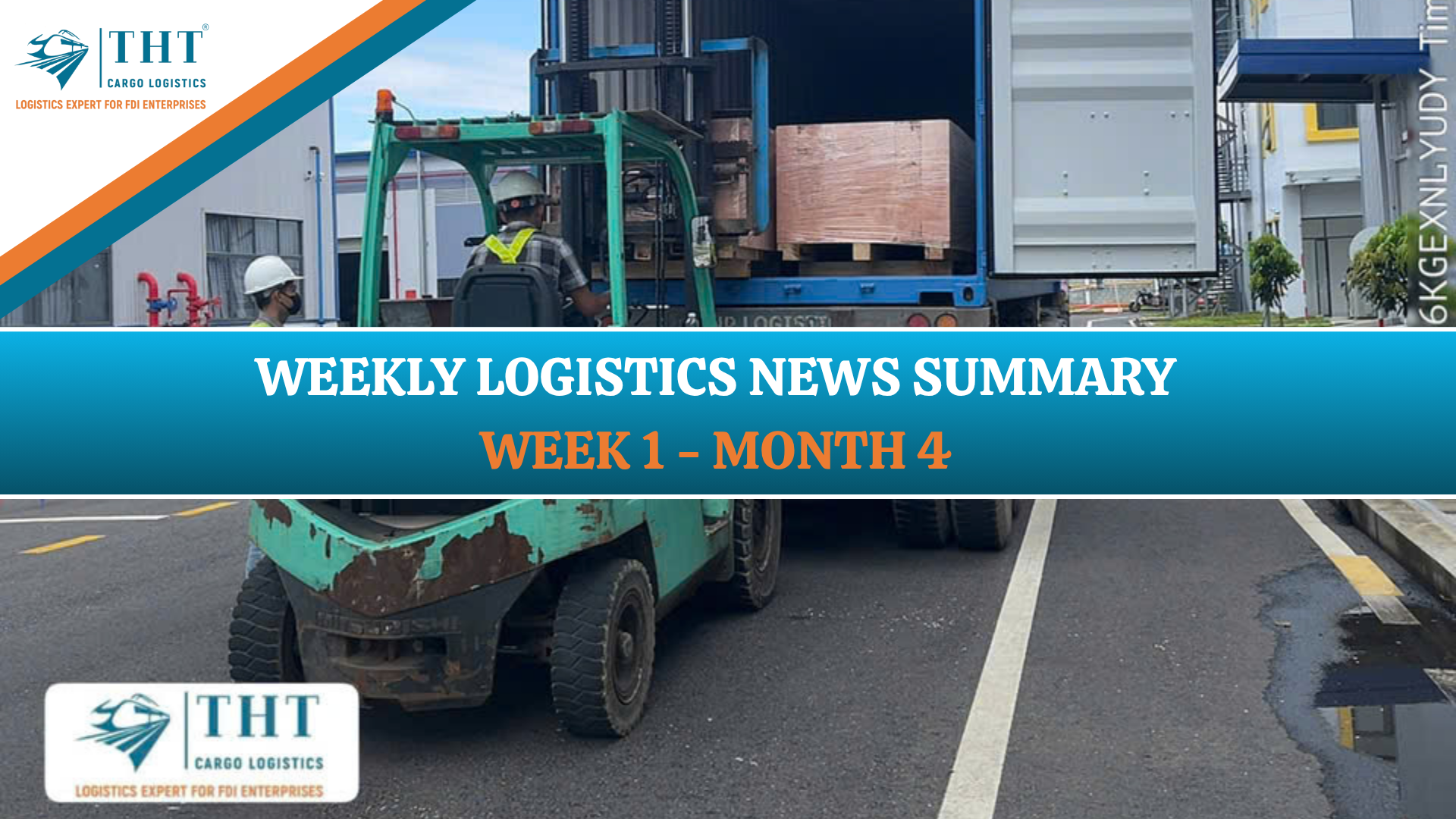
Welcome back to our weekly news summary. Over the past week, the global Logistics and Supply Chain market has witnessed several significant fluctuations. Let’s take a look at the 4 most noteworthy highlights.
1. FDI Shifting Toward High-Tech Sectors and Competition for Investment in Southeast Asia
FDI inflows into Vietnam and Southeast Asian countries are undergoing a clear transformation, shifting from labor-intensive industries to high-tech sectors such as semiconductors, electronics, electric vehicles (EV), and AI. This trend not only increases supply chain value but also demands stringent specialized logistics capabilities to handle large-scale machinery production lines.
Key Impacts:
- Stricter requirements for high-tech standard warehousing systems (clean rooms, environmental control).
- Demand for professional multimodal transport processes for high-value components and semi-finished products.
- Driving demand for Project Logistics to transport modern production lines.
2. IoT and Real-time Visibility: The Foundation of the Digital Supply Chain
IoT technology is playing a central role in building “Real-time Visibility.” Connecting devices and vehicles allows for continuous data transmission, helping businesses not only know where their goods are but also clearly understand the temperature, humidity, and risks to cargo at all times.
Key Impacts:
- 24/7 monitoring of cargo location and status, enabling rapid incident handling as soon as risks arise.
- Enhancing customer experience through transparency and accurate order tracking capabilities.
- Minimizing loss and damage of goods through early warnings from sensor systems.
3. EU Tightens Customs Control on Low-Value Imports
The European Union (EU) is implementing a major reform by planning to abolish the import tax exemption for shipments valued under 150 EUR. This aims to combat tax fraud and control cargo quality, while forcing e-commerce platforms to take responsibility as a de facto importer in this market.
Key Impacts:
- Import costs into the EU may increase due to the application of new taxes and processing fees.
- Stricter requirements for electronic data declaration and documentation, affecting customs clearance time.
- Tighter control over quality and safety standards for consumer and electronic goods.
4. Increasing International Cooperation to Stabilize Supply Chains
In the face of logistics cost pressures and geopolitical risks, many businesses are gradually reducing their reliance on air freight to shift toward sea and multimodal transport. This trend not only helps optimize costs but also supports carbon emission reduction goals in the global supply chain.
Key Impacts:
- A shift toward a “Sea freight first” strategy, prioritizing sea transport for general cargo.
- Increased use of multimodal transport (Sea-Air, Rail-Truck) to balance speed and cost.
- Formation of secure logistics alliances to diversify supply sources and transport routes.
Looking for Optimal Logistics Solutions?
With extensive experience and a deep understanding of the international market, we are confident in providing safe, fast, and cost-effective transport solutions.
Visits: 16