

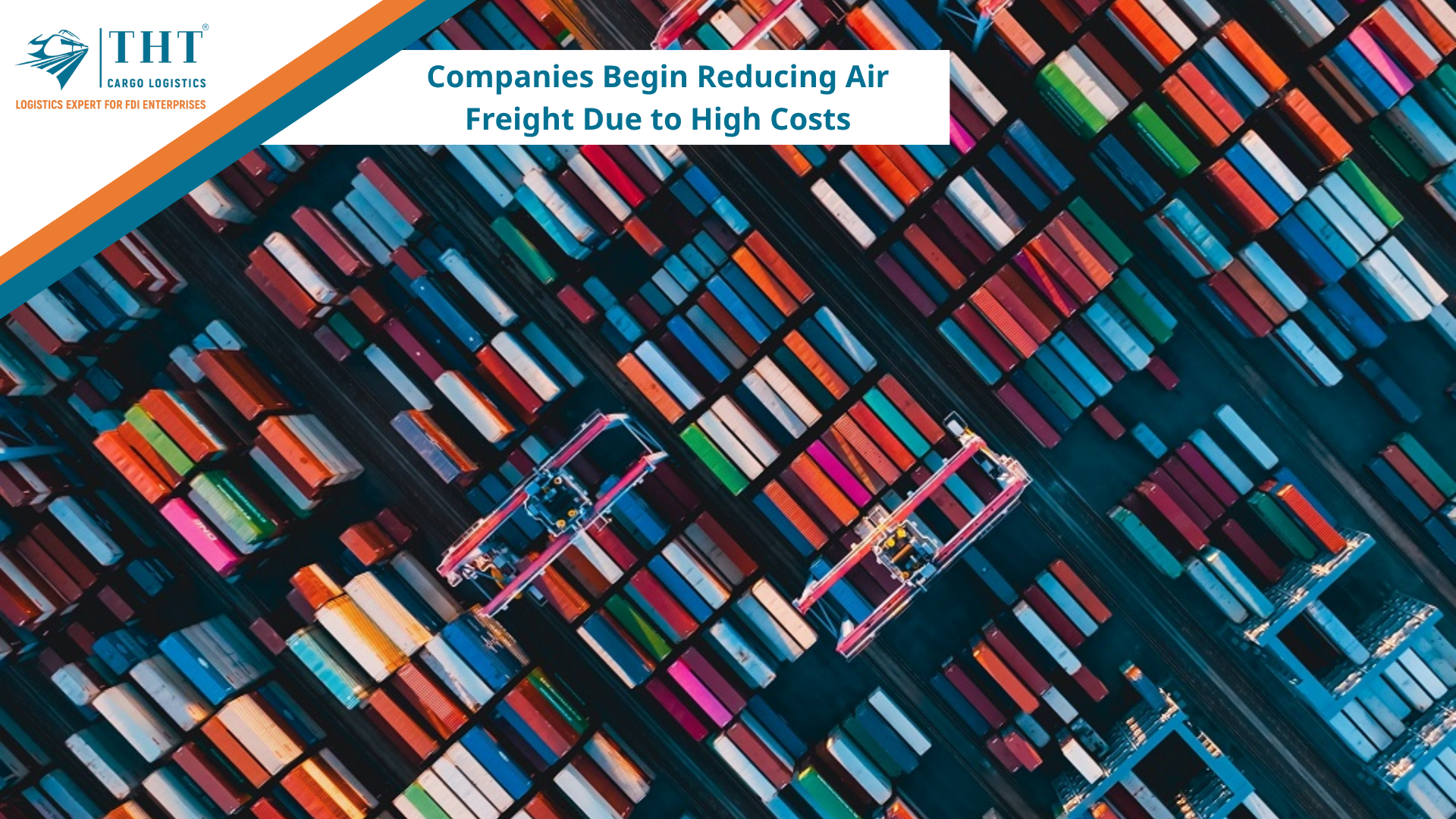
Companies Begin Reducing Air Freight Due to High Costs
Amid rising logistics costs and increasing pressure to reduce carbon emissions, many international companies are beginning to reduce their reliance on air freight and shift to lower-cost transportation modes such as ocean freight and rail transport.
A notable example is Hugo Boss, which announced that it will reduce the share of air freight in its supply chain and only use air freight in special cases instead of using it regularly as before.
Companies Reduce Dependence on Air Freight to Lower Logistics Costs
According to international logistics reports, air freight is currently the most expensive mode of international transportation. The use of air freight often significantly increases logistics costs, affecting companies’ profit margins.
Therefore, many companies are shifting to strategies such as:
- Sea freight first
- Using air freight only for urgent shipments
- Increasing the use of multimodal transport
- Optimizing production planning to reduce urgent shipments
- Ordering earlier to allow shipments by ocean freight
This trend is appearing across many industries such as fashion, electronics, retail, and manufacturing.
Air Freight Will Be Used for Urgent and High-Value Cargo
In the near future, the role of air freight may change. Instead of transporting general cargo, air freight will mainly be used for:
- High-value goods
- Urgent shipments
- Emergency production components
- E-commerce shipments requiring fast delivery
- Samples and trial products
Meanwhile, general cargo, large-volume production goods, or non-urgent shipments will shift to ocean freight or rail transport to reduce costs.
Ocean Freight and Multimodal Transport Are Returning
As companies reduce their reliance on air freight, ocean freight is returning to play the main role in international supply chains. At the same time, multimodal transport is also growing as companies combine multiple transportation modes such as:
- Sea – Air
- Sea – Truck
- Rail – Sea
- Rail – Truck
Using multimodal transport helps companies balance cost and transit time instead of choosing only the fastest or the cheapest transportation mode.
Logistics Trends in the Near Future
Based on these changes, several logistics trends can be identified for the near future:
- Air freight will be used for urgent and high-value goods
- Ocean freight will continue to play the main role in international transportation
- Multimodal transport will grow strongly
- Companies will optimize transportation planning to reduce logistics costs
- Supply chains will shift from “fastest” to “most cost-efficient”
This trend shows that companies are increasingly focusing on optimizing logistics costs and building stable supply chains rather than prioritizing speed as in the past.
TELL US WHAT YOU NEED!
Visits: 22