

- AI, Robotics, and Data Are Becoming the Foundation of Modern Logistics
- AI Helps Optimize Operations and Forecast Logistics Demand
- Robotics and Automation Are Transforming Warehouse Operations
- Data and IoT Enable Real-Time Supply Chain Management
- The Intralogistics Automation Market Is Growing Rapidly
- Logistics Is Shifting from a Transportation Industry to a Technology Industry
- Conclusion
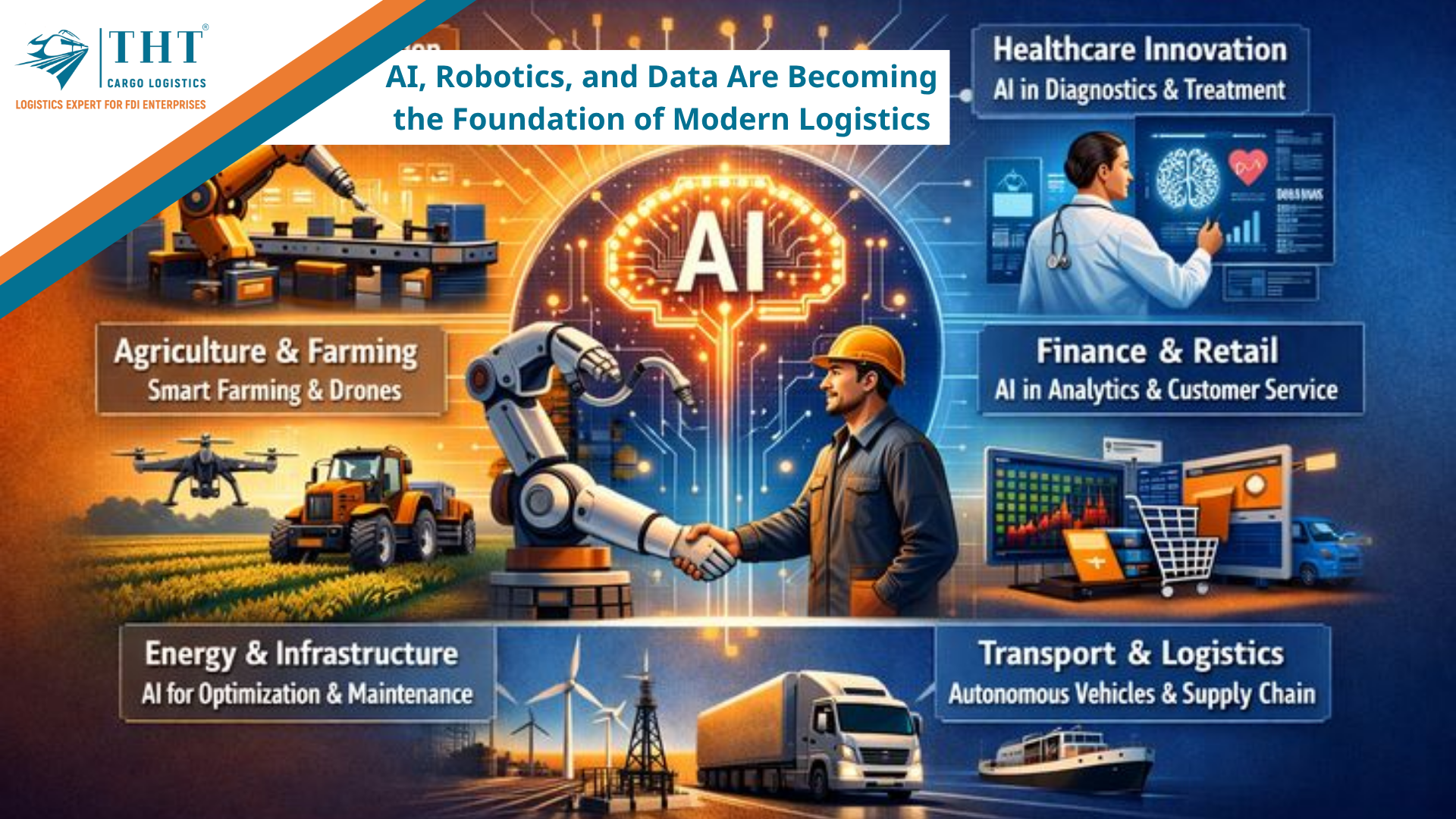
AI, Robotics, and Data Are Becoming the Foundation of Modern Logistics
The global logistics industry is entering a major transformation phase driven by technology, in which artificial intelligence (AI), robotics, and data are considered the three core elements shaping modern logistics. Instead of focusing solely on traditional transportation and warehousing, logistics is now shifting toward a technology-driven, automated, and data-based operating model.
AI Helps Optimize Operations and Forecast Logistics Demand
In logistics, AI is being widely applied in various activities such as:
- Transportation demand forecasting
- Route optimization
- Transport planning
- Inventory optimization
- Order volume forecasting
- Supply chain risk management
AI systems can analyze historical data, market data, weather conditions, port congestion, and vessel schedules to develop optimal transportation plans, helping reduce logistics costs and shorten delivery times.
Robotics and Automation Are Transforming Warehouse Operations
In addition to AI, robotics and automation systems are increasingly being deployed in warehouses and distribution centers. Common intralogistics technologies today include:
- Autonomous Mobile Robots (AMR)
- Automated Guided Vehicles (AGV)
- Automated conveyor systems
- Automated sorting systems
- Automated Storage & Retrieval Systems (AS/RS)
- Picking and packing robots
These technologies help reduce dependence on manual labor, increase order processing speed, reduce errors, and improve warehouse operational efficiency.
In particular, smart warehouses and dark warehouses (fully automated warehouses) are becoming a major trend in logistics centers, e-commerce operations, and manufacturing facilities.
Data and IoT Enable Real-Time Supply Chain Management
The third key element of modern logistics is data. With the development of IoT, RFID, sensors, and Warehouse Management Systems (WMS), companies can track goods in real time across the entire supply chain.
Data helps companies to:
- Track cargo location
- Manage inventory in real time
- Forecast demand
- Optimize transportation
- Reduce excess inventory
- Detect supply chain risks early
- Optimize logistics costs
In addition, digital twin technology is being used to simulate warehouse operations and supply chains, allowing companies to test operational scenarios before implementing them in real operations.
The Intralogistics Automation Market Is Growing Rapidly
According to market reports, the global intralogistics automation solutions market is growing rapidly, from approximately USD 22.4 billion in 2024 and expected to reach nearly USD 34.7 billion by 2030. This growth is driven by factors such as:
- E-commerce growth
- Demand for faster delivery
- Rising labor costs
- The need to reduce inventory errors
- Supply chain optimization requirements
- Digital transformation and Industry 4.0
Logistics centers, manufacturing plants, distribution centers, and 3PL companies are investing heavily in smart warehouses, robotics, and logistics management software.
Logistics Is Shifting from a Transportation Industry to a Technology Industry
This trend shows that the nature of logistics is changing. In the past, logistics mainly involved transportation, warehousing, and freight forwarding, but today logistics is becoming an industry driven by technology, data, and automation.
In the future, the competitive advantage of logistics companies may no longer lie in the number of trucks or warehouses, but in:
- Technology
- Data systems
- Analytical capabilities
- Level of automation
- Supply chain optimization capabilities
- Digital platforms and management systems
Conclusion
Overall, AI, robotics, and data are gradually transforming how the logistics industry operates, from warehousing and transportation to supply chain management. The trend of digitalization and automation is expected to continue growing in the coming years as companies seek to optimize costs, speed up delivery, and improve supply chain visibility and control.
TELL US WHAT YOU NEED!
Visits: 22